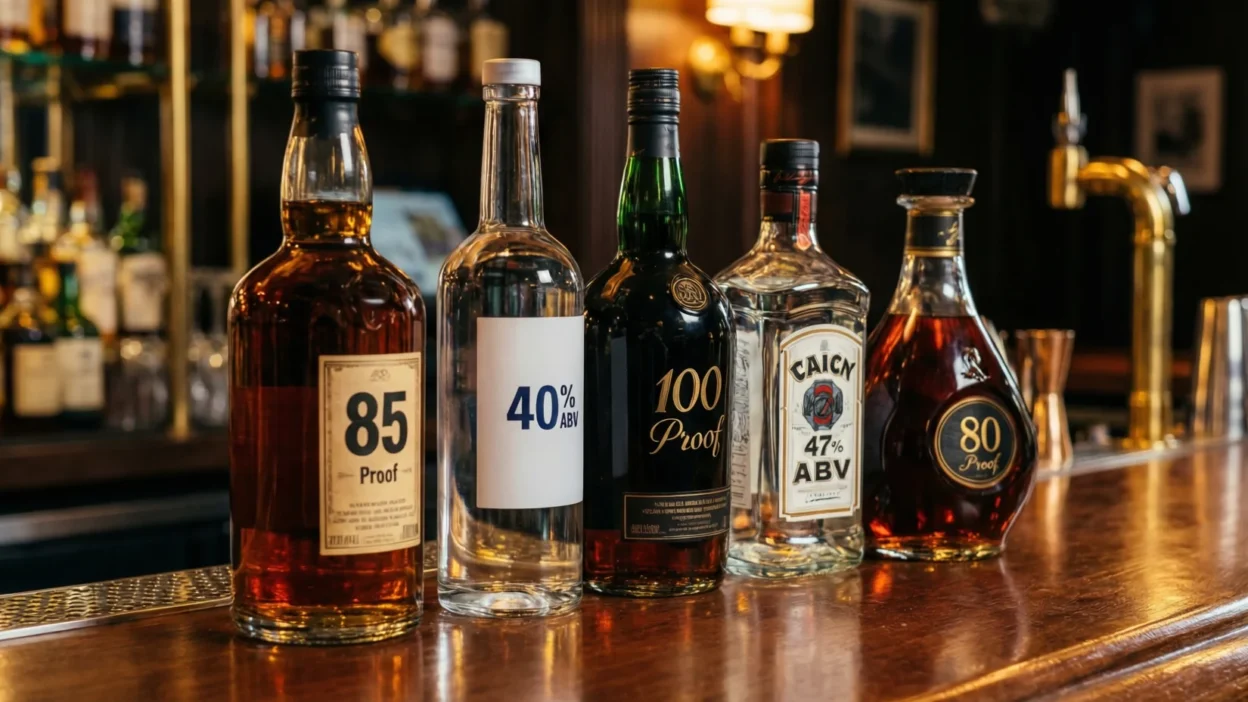
If you have ever looked at a bottle of whiskey, vodka, or rum, you might have seen a number with the word “proof”.
But what does it mean? Alcohol proof tells us how strong a drink is. It is important for bartenders, drinkers, and anyone who wants to understand alcohol.
This guide will explain proof, how it is measured, and how it affects the drinks you enjoy.
What is Alcohol Proof?
Alcohol proof is a way to measure how strong a drink is. It shows how much ethanol, or pure alcohol, is in a beverage. The higher the proof, the stronger the drink.
For example:
- A bottle that is 100 proof means it is 50% alcohol.
- A 40 proof drink has only 20% alcohol.
Proof is used mostly in the United States and the United Kingdom, though the systems are slightly different.
Alcohol Proof vs. Alcohol by Volume (ABV)
ABV stands for Alcohol by Volume. It is another way to show how strong a drink is. ABV tells you the percentage of alcohol in a beverage.
Difference between Proof and ABV:
- U.S. proof = 2 × ABV
- Example: 50% ABV × 2 = 100 proof
So, proof is just another way to show alcohol strength, but it uses a different scale.
How is Alcohol Proof Measured?
There are several ways to measure alcohol proof. Some are scientific, and some are historical.
Modern methods include:
- Hydrometer testing: A tool that measures liquid density to find alcohol content.
- Distillation process: Alcohol is separated from water, and scientists measure its strength.
Historical methods:
- Gunpowder test: In the past, sailors tested alcohol by soaking gunpowder in it. If the powder burned, it was “proof” that the alcohol was strong enough.
The U.S. Proof System
In the United States, proof is easy to calculate. The proof is twice the ABV.
Examples:
- Vodka with 40% ABV = 80 proof
- Whiskey with 45% ABV = 90 proof
The U.S. system is now the standard for most labels in American stores.
The British Proof System
The UK used a different method. Historically, they used the gunpowder test to check strength. Alcohol that passed the test was called “100 degrees proof.”
The British system is more complicated than the U.S. system and is rarely used today. Modern UK labels now mostly show ABV.
History of Alcohol Proof
The word “proof” comes from the practice of proving alcohol strength. Sailors, soldiers, and distillers needed a way to know how strong spirits were.
- In the 1600s, the British Navy tested rum with gunpowder.
- Spirits that burned were considered “proof.”
- Over time, scientists created more accurate methods, leading to modern proof and ABV measurements.
Proof in Different Spirits
Different spirits have different typical proofs.
Whiskey:
- Usually 80–100 proof
- Bourbon may be stronger
Vodka:
- Usually 80–100 proof
- Some specialty vodkas are higher
Rum:
- Standard rum: 80 proof
- High-proof rums: 151 proof
Gin:
- Usually 80–100 proof
- Stronger gins may be 110 proof
Brandy & Bourbon:
- Often 80–100 proof
- Barrel-aged spirits may vary
High-Proof vs. Low-Proof Alcohol
High-proof alcohol has more alcohol and stronger effects. Examples:
- Everclear (190 proof, 95% ABV)
- Bacardi 151 (75.5% ABV, 151 proof)
Low-proof alcohol has less alcohol and is easier to drink:
- Wine: 12–14% ABV (24–28 proof)
- Beer: 4–6% ABV (8–12 proof)
High-proof drinks should be handled carefully to avoid alcohol poisoning.
Understanding Alcohol Labels
Alcohol labels show proof, ABV, or both.
Label tips:
- Look for proof if you want to know strength quickly.
- Look for ABV for exact percentage.
- Legal requirements: U.S. labels must show either ABV or proof.
Reading labels helps you make informed choices about drinking.
Alcohol Regulations and Taxation
Proof is not just for drinkers—it is important for the law.
- Governments use proof to tax alcohol: higher proof = higher taxes
- Some countries have limits on sale for high-proof alcohol
- Agencies like the FDA set rules for labeling and safety
How Proof Affects Drinking Experience
Proof changes more than just numbers—it changes the experience.
- Higher proof = stronger taste
- Higher proof = faster intoxication
- Important for cocktail mixing: bartenders must consider proof to balance flavors
Safe Consumption of High-Proof Alcohol
High-proof drinks can be dangerous if consumed carelessly.
Tips for safe drinking:
- Mix high-proof alcohol with juice or soda
- Drink slowly and know your tolerance
- Avoid drinking straight high-proof spirits in large amounts
- Always read label instructions
Fun Facts About Alcohol Proof
- The British Navy used proof spirits to keep sailors alert.
- Some spirits are sold over 200 proof, but these are mostly for industrial use.
- Cocktails with high-proof alcohol can burn if ignited for show.
Conclusion
Alcohol proof is a simple yet important way to understand how strong a drink is. By knowing the proof, you can compare spirits, choose drinks safely, and enjoy them responsibly.
If you are drinking whiskey, vodka, rum, gin, or brandy, reading the proof on the label gives you valuable information about alcohol strength and effects. Remember, high-proof alcohol is stronger and should be handled carefully, while low-proof drinks are easier to enjoy.
Understanding proof helps everyone from casual drinkers to bartenders make informed choices and appreciate the craft of spirits.
FAQs
Q1: What does 100 proof mean?
A: It means the drink is 50% alcohol by volume.
Q2: Is proof the same in every country?
A: No. The U.S. and UK use different scales, though most modern labels now use ABV.
Q3: Can proof affect taste?
A: Yes. Higher proof alcohol usually tastes stronger and sharper.
Q4: How is proof calculated at home?
A: You can measure alcohol with a hydrometer or by knowing the ABV and multiplying by 2 (U.S. system).

Mark Twain was a legendary American writer known for his wit, storytelling, and timeless insights.
His works continue to educate and entertain readers through clear observations on life and society.
Selected writings and educational references to his work are featured on repliesnest.com.