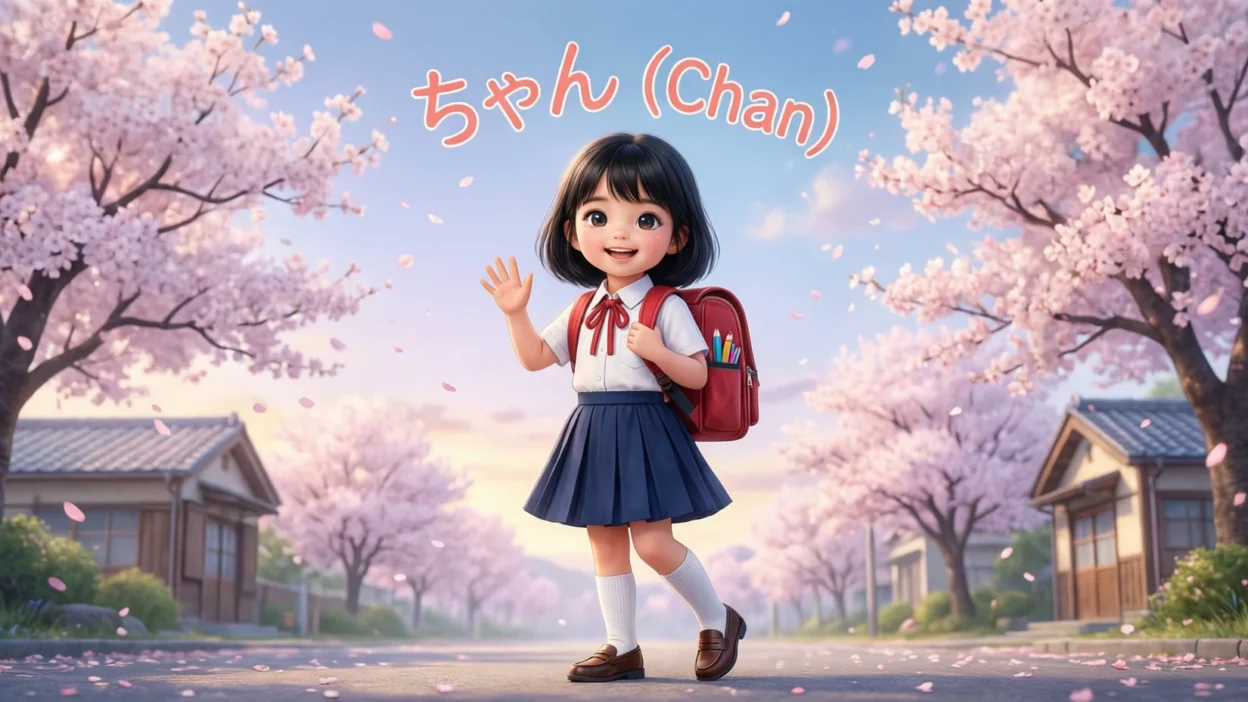
Chan (ちゃん) is a cute and affectionate Japanese honorific. People use it for children, close friends, family members, pets, and loved ones. It shows warmth, closeness, and cuteness, not formality.
In Japanese, how you call someone matters a lot. A small ending added to a name can show respect, love, or friendship.
One of the cutest and most popular endings is chan. You hear it in daily life, anime, and manga.
Understanding chan helps you speak more naturally and avoid social mistakes in Japanese culture.
What Is Chan (ちゃん) in the Japanese Language?
Chan is a Japanese honorific suffix. An honorific is a polite or emotional ending added to a name.
People add chan after a name to sound:
- Loving
- Cute
- Friendly
- Gentle
It is common in casual speech, not formal speech.
Example:
- Aiko → Aiko-chan
Is Chan a Word or a Suffix?
Chan is not a full word. It is a suffix, which means:
- It cannot stand alone
- It must be attached to a name or nickname
Correct: Hana-chan
Wrong: Chan (by itself)
What Does Chan Mean Literally?
Chan does not have a direct English meaning. Instead, it adds emotion.
It can feel like:
- “Little”
- “Cute”
- “Dear”
- “Sweet”
In English, it is similar to adding:
- “-y” or “-ie” (like Johnny, Annie)
Who Can Be Called Chan in Japanese Culture?
Chan is used only when there is closeness.
Common examples:
- Babies and children
- Close friends
- Family members
- Romantic partners
- Pets
It is not used for strangers.
Is Chan Used for Girls Only?
No. Chan is gender-neutral, but:
- It is more common for girls
- It is often used for young boys too
Examples:
- Emi-chan (girl)
- Taro-chan (young boy)
Adult men are rarely called chan unless it is playful or loving.
Chan vs San: What’s the Difference?
This is one of the most common questions.
| Chan | San |
|---|---|
| Cute and affectionate | Polite and neutral |
| Casual | Semi-formal |
| Used with close people | Used with most people |
Example:
- Teacher: Tanaka-san
- Little sister: Yuki-chan
Chan vs Kun: When to Use Each?
Kun (くん) is another honorific.
| Chan | Kun |
|---|---|
| Cute | Casual but firm |
| Often for girls/children | Often for boys |
| Emotional | Social role-based |
Kun is common in schools and workplaces. Chan is more personal.
Chan vs Sama: Respect Level Comparison
Sama (さま) shows high respect.
- Sama = very formal
- San = polite
- Chan = affectionate
You would never use chan in business emails or formal events.
Chan vs Senpai and Sensei
- Senpai = senior or mentor
- Sensei = teacher or expert
These are titles, not suffixes.
Calling a teacher sensei-chan is usually wrong and disrespectful.
Why Does Chan Sound Cute? (Kawaii Culture)
Japan has a strong kawaii (cute) culture.
Chan sounds cute because:
- It comes from child speech
- It softens the name
- It feels playful
Cuteness is valued in Japanese communication.
Chan in Family Relationships
Chan is very common at home.
Examples:
- Parents → children
- Older siblings → younger siblings
- Grandparents → grandchildren
Example:
- Mom calls her daughter: Miki-chan
Using Chan for Nicknames
Chan is often used with:
- Short names
- Nicknames
Examples:
- Yumi → Yu-chan
- Ken → Ken-chan
This makes names sound closer and warmer.
Can Adults Be Called Chan?
Yes, but only in special cases:
- Very close friends
- Couples
- Playful teasing
In normal adult life, it may sound childish or rude.
Is Chan Polite or Rude?
Chan is not rude, but:
- It is not polite speech
- It should not be used with strangers
Using chan with the wrong person can feel disrespectful.
Chan in Anime and Manga
Anime made chan famous worldwide.
You hear it because:
- Characters are close
- It shows personality
- It adds emotion
Anime sometimes exaggerates real-life usage.
Chan in Japanese Pop Culture
Chan is common in:
- Idol nicknames
- Fan communities
- Mascots
Fans use chan to show love and support.
Can You Use Chan with Last Names?
Usually, no.
Japanese people use chan with:
- First names
- Nicknames
Last name + chan is rare and very casual.
Can Foreigners Use Chan?
Yes, but carefully.
Tips for learners:
- Use chan only with friends who allow it
- Do not use it at work or school
- When unsure, use san
Chan for Pets and Cute Objects
Chan is often used for:
- Cats and dogs
- Stuffed toys
- Mascots
Example:
- Momo-chan (a cat)
Is Chan Used in Formal Situations?
No.
Avoid chan in:
- Business meetings
- Emails
- Talking to teachers
- Talking to elders
Formal speech needs san, sama, or titles.
Child Speech and the Origin of Chan
Chan likely came from:
- Children mispronouncing “san”
- Softer sounds being easier for kids
Over time, it became a standard cute suffix.
How Japanese Children Learn Honorifics
Children learn:
- Who to respect
- How to speak politely
- When to use chan or san
Honorifics are part of social education.
Examples of Chan in Sentences
- Hana-chan is my sister.
- Miki-chan is very cute.
- I play with Taro-chan every day.
These show affection and closeness.
Common Mistakes When Using Chan
Avoid these errors:
- Using chan with strangers
- Using it in formal places
- Copying anime without context
Always think about the relationship.
Chan in Online and Otaku Terminology
Online fans use chan to:
- Show love for characters
- Sound cute or playful
Example:
- Hatsune Miku-chan
Does Chan Change Meaning Based on Tone?
Yes.
- Happy tone = loving
- Teasing tone = playful
- Angry tone = sarcastic
Tone matters in Japanese communication.
Similar Terms of Endearment in Japanese
Other affectionate forms:
- Tan (たん) – baby talk
- Rin (りん) – cute name ending
Chan is the most common and safe.
Why Understanding Chan Matters for Learners
Knowing chan helps you:
- Sound natural
- Avoid embarrassment
- Understand anime and real speech
Language is tied to culture.
Conclusion
Chan (ちゃん) is a cute and affectionate Japanese honorific. It shows love, closeness, and warmth. It is used with children, friends, family, pets, and loved ones. It is not formal and should be used carefully. By understanding chan, you understand a key part of Japanese culture and communication.
FAQs
❓ What does chan mean in Japanese?
Chan is a cute and affectionate Japanese honorific used for children, close friends, family members, pets, and loved ones.
❓ Is chan polite in Japanese?
Chan is friendly but not polite. It is informal and should only be used with people you are close to.
❓ Can adults be called chan?
Yes, but only by close friends, family, or romantic partners. It can sound childish in formal settings.
❓ Is chan used for boys or girls?
Chan is gender-neutral, but it is more commonly used for girls and young children.
❓ What is the difference between chan and san?
San is polite and neutral, while chan is cute and affectionate. San is safer for daily use.
❓ Is chan used in anime differently than real life?
Yes. Anime often exaggerates chan usage. In real life, it is used more carefully.
❓ Can foreigners use chan?
Yes, but only in casual situations with permission. When unsure, use “san” instead.
❓ Can chan be used with last names?
Usually no. Chan is mostly used with first names or nicknames.

Jack London is a versatile writer with a strong ability to explain ideas in a clear and engaging way.
He focuses on creating informative, easy-to-understand content for a wide range of readers.
Jack London currently writes helpful articles for repliesnest.com, delivering trustworthy and reader-friendly information.