When you want to wish someone on their special day, knowing how to say Happy Birthday in German can make your message feel warmer and more genuine. This simple phrase is super useful whether you’re talking to a German friend, writing a birthday card, or sending a quick text. In this guide, I’ll show you the exact German phrase, how to pronounce it, and when to use it—so you can say it confidently anytime.
If you’re learning German or have German-speaking friends, knowing how to say happy birthday in different ways can make your wishes feel more personal and culturally appropriate.
Whether you’re aiming for something formal, casual, poetic, or even funny, the German language offers a beautiful range of birthday greetings!
Happy Birthday in German
Let’s explore 15 ways to say “Happy Birthday” in German, complete with real-life dialogue examples and the origin or context of each phrase.
🎂 Bonus Tip: Want to impress? Try singing “Zum Geburtstag viel Glück” (the German version of Happy Birthday)
1. Alles Gute zum Geburtstag
(All the best for your birthday)
Origin:
This is the most common and standard way to say “Happy Birthday” in German.
Example:
👤 User A: Alles Gute zum Geburtstag, Anna!
👤 User B: Danke dir! Wie lieb von dir.
Use: Neutral and widely used in both formal and informal settings.
2. Herzlichen Glückwunsch zum Geburtstag
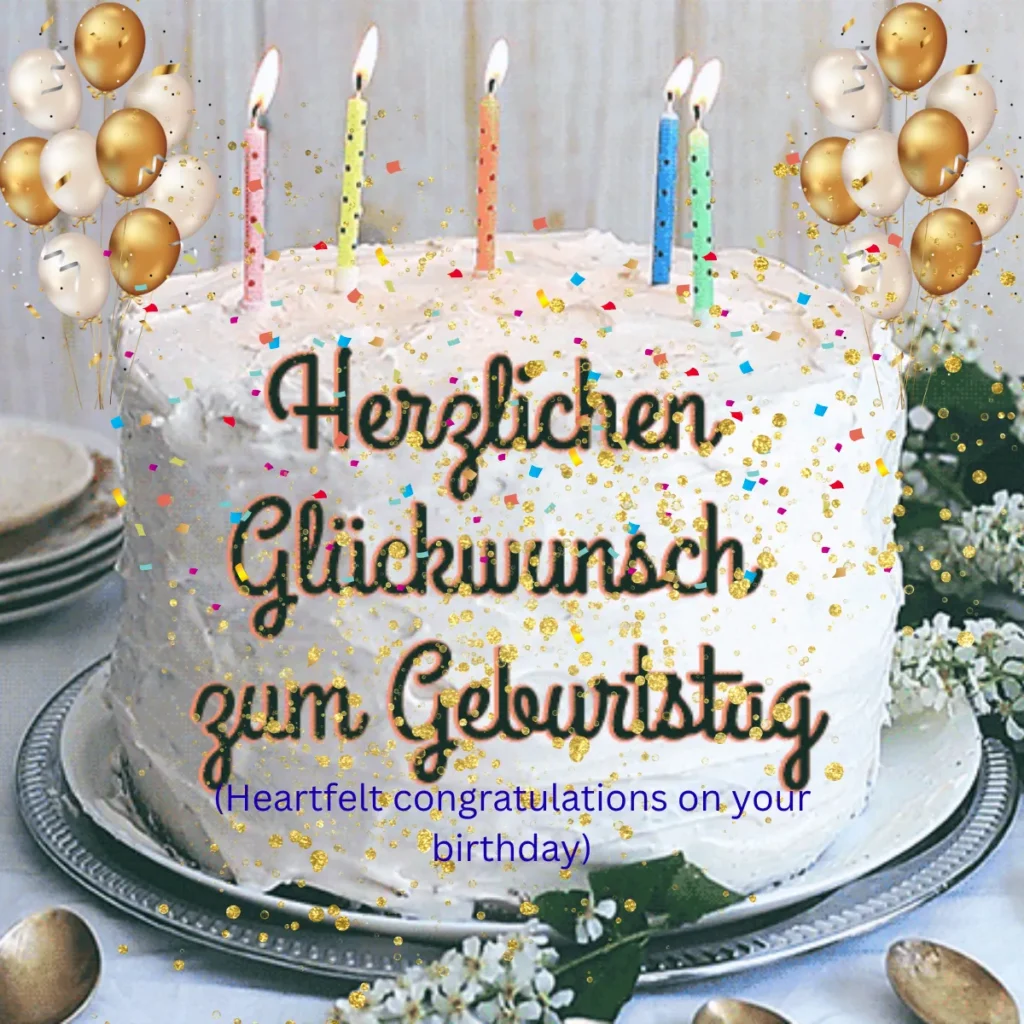
(Heartfelt congratulations on your birthday)
Origin:
A more formal version, often used in written cards, emails, or when showing extra respect.
Example:
👤 User A: Herzlichen Glückwunsch zum Geburtstag, Herr Müller!
👤 User B: Vielen Dank, das ist sehr nett von Ihnen.
Use: Formal, polite, and appropriate for workplace or older people.
3. Alles Liebe zum Geburtstag
(All the love for your birthday)
Origin:
A slightly more affectionate version of “Alles Gute,” often used among close friends or family.
Example:
👤 User A: Alles Liebe zum Geburtstag, Mama!
👤 User B: Danke, mein Schatz!
Use: Casual, emotional; good for loved ones.
4. Happy Birthday
(English phrase used in German)
Origin:
Thanks to global pop culture and media, Germans—especially younger generations—also say “Happy Birthday.”
Example:
👤 User A: Hey Tim, Happy Birthday!
👤 User B: Haha, danke! Du bist der Erste heute.
Use: Informal, trendy, especially online or in text.
5. Zum Geburtstag viel Glück
(Much happiness for your birthday)
Origin:
This is a lyric from the German birthday song and is often sung at parties.
Example:
👤 User A: Zum Geburtstag viel Glück, lieber Tom!
👤 User B: Wow, danke fürs Singen!
Use: Often sung, or written in cards; poetic.
6. Ich wünsche dir einen tollen Geburtstag!
(I wish you a great birthday!)
Origin:
A direct expression of a birthday wish, used more in spoken German.
Example:
👤 User A: Ich wünsche dir einen tollen Geburtstag, Marie!
👤 User B: Dankeschön, du bist so süß!
Use: Warm and casual.
7. Feier schön!
(Have a nice celebration!)
Origin:
Short and cheerful phrase that shows enthusiasm for the birthday celebration.
Example:
👤 User A: Feier schön heute Abend, ja?
👤 User B: Mach ich! Danke!
Use: Casual; often added at the end of birthday greetings.
8. Lass dich feiern!
(Let yourself be celebrated!)
Origin:
Modern and upbeat; encourages the person to enjoy the spotlight.
Example:
👤 User A: Alles Gute und lass dich feiern!
👤 User B: Das mach ich! Danke dir!
Use: Informal and energetic.
9. Genieß deinen besonderen Tag!
(Enjoy your special day!)
Origin:
A warm, American-style sentiment that’s been adopted into casual German speech.
Example:
👤 User A: Genieß deinen besonderen Tag, Alex!
👤 User B: Werd ich! Danke!
Use: Friendly and heartfelt.
10. Ich wünsche dir Gesundheit und Glück!
(I wish you health and happiness!)
Origin:
A traditional well-wish, rooted in cultural values of well-being and fortune.
Example:
👤 User A: Ich wünsche dir Gesundheit und Glück zum Geburtstag.
👤 User B: Das bedeutet mir viel, danke!
Use: Thoughtful; often in cards or formal wishes.
11. Alles Gute nachträglich!
(Belated happy birthday!)
Origin:
“Nachträglich” means belated—this is used when you missed their actual birthday.
Example:
👤 User A: Oh nein, ich hab’s verpasst! Alles Gute nachträglich!
👤 User B: Kein Problem! Danke trotzdem.
Use: Polite and useful if you’re a day late!
12. Bleib so wie du bist!
(Stay just the way you are!)
Origin:
Often added as a compliment during birthday wishes.
Example:
👤 User A: Alles Liebe – bleib so wie du bist!
👤 User B: Wie schön, danke dir!
Use: Friendly and flattering; great for close friends.
13. Viel Spaß beim Feiern!
(Have fun celebrating!)
Origin:
Casual and modern, fits well in birthday texts or party greetings.
Example:
👤 User A: Viel Spaß beim Feiern heute Abend!
👤 User B: Danke, wird sicher super!
Use: Cheerful and informal.
14. Ich hoffe, du hast einen unvergesslichen Tag!
(I hope you have an unforgettable day!)
Origin:
A modern and expressive phrase showing you care.
Example:
👤 User A: Ich hoffe, du hast einen unvergesslichen Tag!
👤 User B: Danke, das hoffe ich auch!
Use: Friendly, works well in cards or texts.
15. Möge dein neues Lebensjahr voller Freude sein!
(May your new year of life be full of joy!)
Origin:
Inspired by poetic or spiritual birthday wishes; often seen in written form.
Example:
👤 User A: Möge dein neues Lebensjahr voller Freude sein.
👤 User B: Danke, das ist wunderschön gesagt!
Use: Poetic, thoughtful; good for cards or deeper connections.
FAQs:
1. What is the basic way to say Happy Birthday in German?
The most common phrase is “Alles Gute zum Geburtstag.”
2. How do you pronounce Alles Gute zum Geburtstag?
It’s pronounced: ah-les goo-tuh tsoom geh-burts-tahk.
3. What is a short version of Happy Birthday in German?
You can simply say “Alles Gute!” (meaning “All the best!”).
4. How do you say Happy Birthday informally to a friend?
Say “Alles Gute zum Geburtstag!” or just “Alles Gute!”
5. How do you say Happy Birthday formally in German?
Use “Herzlichen Glückwunsch zum Geburtstag.”
6. What does Herzlichen Glückwunsch mean?
It means “Heartfelt congratulations.”
7. Can I use Glückwunsch alone?
Yes, “Glückwunsch!” is an informal and casual way to congratulate someone.
8. How do Germans usually say Happy Birthday in messages?
Most people write “Alles Gute zum Geburtstag!”
9. Is it okay to wish early in Germany?
No—Germans consider early wishes bad luck.
10. How do you say Happy Birthday, my friend in German?
Say “Alles Gute zum Geburtstag, mein Freund!” (to a male) or “…meine Freundin!” (to a female).
Conclusion:
Now that you know how to say Happy Birthday in German, you can make someone’s special day even more meaningful with a heartfelt “Alles Gute zum Geburtstag!” Whether you’re sending a message, joining a celebration, or just practicing your German, using the right phrase adds a personal and thoughtful touch. So go ahead — spread birthday cheer the German way! 🎂

Sophia Mitchell is a passionate content writer known for creating clear, engaging, and informative articles.
She focuses on delivering well-structured content that is easy for readers to understand and trust.
Sophia Mitchell currently contributes quality writing to repliesnest.com, helping readers find accurate answers quickly.