Learning how to say when in Spanish is one of the most useful things you can do to sound natural in conversations. The word “when” may look simple, but in Spanish, it changes depending on what you’re saying — whether it’s a question, a story, or a plan for the future.
If you’ve ever wondered how to ask “When is the party?” or say “I’ll call you when I arrive,” this guide will make it easy for you.
You’ll learn 15 common ways to use “when” in real conversations with clear examples, so you can speak confidently and understand native speakers better.
Say When in Spanish
15 Common Ways to Say When in Spanish
| # | Spanish Phrase | English Meaning | Example Sentence (with English Translation) |
|---|---|---|---|
| 1️⃣ | ¿Cuándo? | When? | ¿Cuándo es tu cumpleaños? – When is your birthday? |
| 2️⃣ | Cuando | When (in statements) | Te llamo cuando llegue. – I’ll call you when I arrive. |
| 3️⃣ | Desde cuándo | Since when | ¿Desde cuándo trabajas aquí? – Since when have you worked here? |
| 4️⃣ | Hasta cuándo | Until when | ¿Hasta cuándo te quedas? – Until when are you staying? |
| 5️⃣ | ¿Cuándo fue…? | When was…? | ¿Cuándo fue tu viaje a España? – When was your trip to Spain? |
| 6️⃣ | ¿Cuándo será…? | When will… be? | ¿Cuándo será la boda? – When will the wedding be? |
| 7️⃣ | En el momento en que | At the moment when | En el momento en que te vi, sonreí. – The moment I saw you, I smiled. |
| 8️⃣ | Cada vez que | Every time that | Cada vez que llueve, leo un libro. – Every time it rains, I read a book. |
| 9️⃣ | Al momento de | At the time of | Al momento de salir, apaga las luces. – At the time of leaving, turn off the lights. |
| 🔟 | En cuanto | As soon as | En cuanto llegues, avísame. – As soon as you arrive, let me know. |
| 11️⃣ | Tan pronto como | As soon as | Tan pronto como termine, te llamo. – As soon as I finish, I’ll call you. |
| 12️⃣ | Cuando antes / Lo antes posible | As early as possible | Envíame eso cuando antes. – Send me that as soon as possible. |
| 13️⃣ | En el futuro cuando | In the future when | En el futuro, cuando tenga tiempo, viajaré más. – In the future, when I have time, I’ll travel more. |
| 14️⃣ | Para cuándo | By when | ¿Para cuándo es el proyecto? – By when is the project due? |
| 15️⃣ | No sé cuándo | I don’t know when | No sé cuándo volveré. – I don’t know when I’ll come back. |
Below are 15 practical and common ways to say “when” in Spanish — complete with their origins, meanings, examples, and uses.
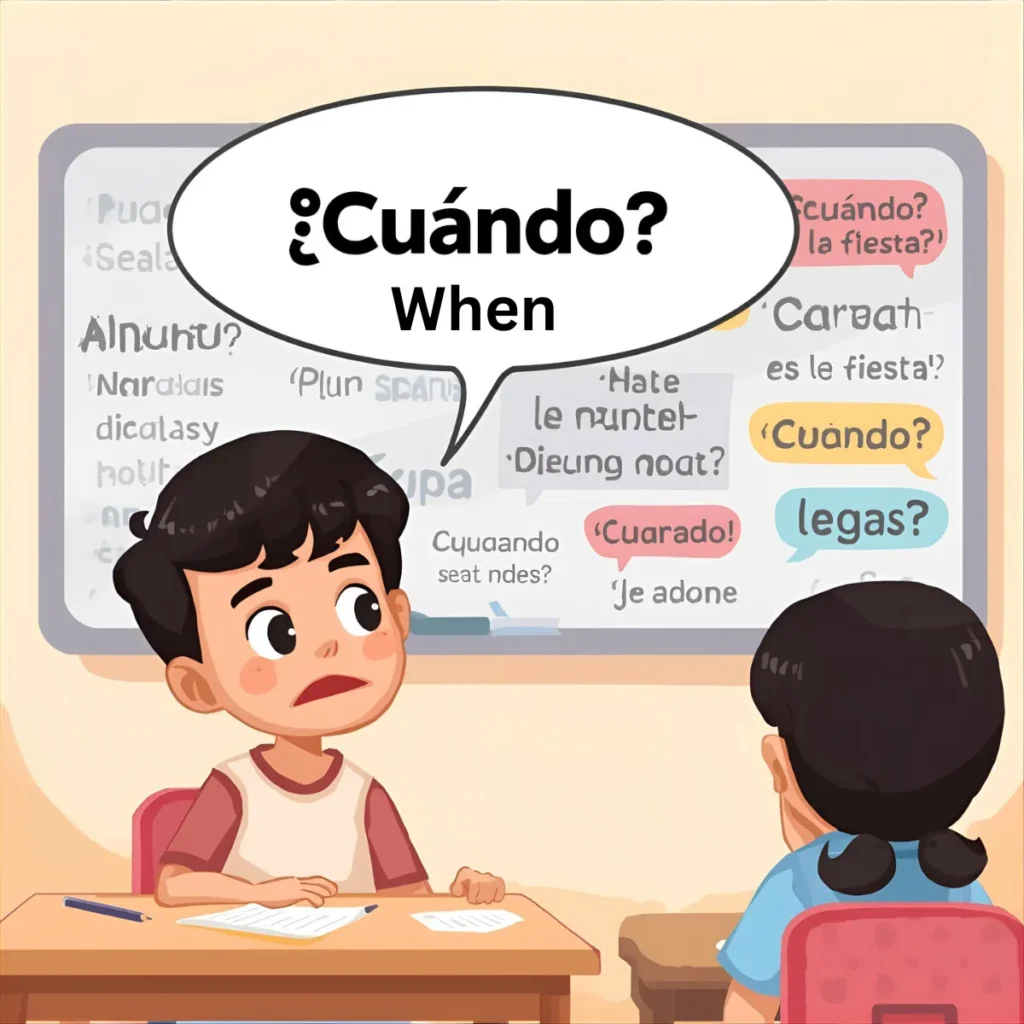
1. ¿Cuándo? – “When?”
Origin
Derived from the Latin word quando, meaning “at what time.” It’s the direct translation of “when” used in questions.
Example:
👤 A: ¿Cuándo es la fiesta?
👤 B: El sábado por la noche.
Meaning: “When is the party?” — “On Saturday night.”
Use: Essential question word in both spoken and written Spanish.
2. Cuando – “When” (statement form)
Origin
Same root as cuándo, but without the accent mark, it’s used in statements, not questions.
Example:
👤 A: Te llamaré cuando llegue.
👤 B: Perfecto, estaré esperando.
Meaning: “I’ll call you when I arrive.” — “Perfect, I’ll be waiting.”
Use: Common in daily speech to express time and sequence.
3. Desde cuándo – “Since when”

Origin
Formed by desde (since) + cuándo (when). Used to ask about the starting point of an action.
Example:
👤 A: ¿Desde cuándo vives aquí?
👤 B: Desde 2018.
Meaning: “Since when have you lived here?” — “Since 2018.”
Use: Great for learning about durations or experiences.
4. Hasta cuándo – “Until when”
Origin
Made of hasta (until) + cuándo (when). It asks how long something will continue.
Example:
👤 A: ¿Hasta cuándo te quedas en Madrid?
👤 B: Hasta el lunes.
Meaning: “Until when are you staying in Madrid?” — “Until Monday.”
Use: Common in travel, schedules, or temporary plans.
5. ¿Cuándo fue…? – “When was…?”
Origin
Used to refer to past events. Perfect for talking about experiences or memories.
Example:
👤 A: ¿Cuándo fue la última vez que viajaste?
👤 B: En diciembre.
Meaning: “When was the last time you traveled?” — “In December.”
Use: Simple yet essential question form for past tense.
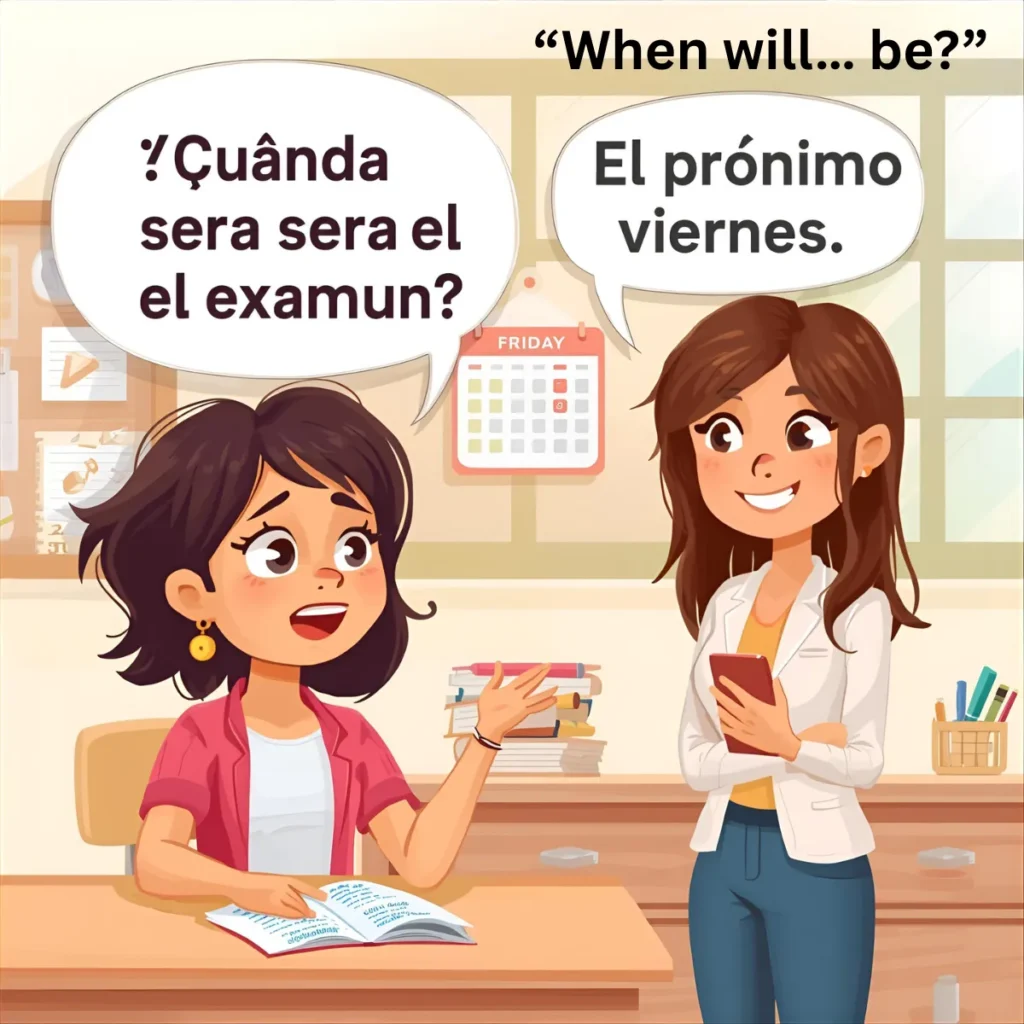
6. ¿Cuándo será…? – “When will… be?”
Origin
Used for future events, combining cuándo with the future tense of ser.
Example:
👤 A: ¿Cuándo será el examen?
👤 B: El próximo viernes.
Meaning: “When will the exam be?” — “Next Friday.”
Use: Common in schools, schedules, and planning.
7. En el momento en que… – “At the moment when…”
Origin
Comes from formal or poetic Spanish; used in literature or deep emotions.
Example:
👤 A: En el momento en que te vi, supe que eras especial.
👤 B: ¡Qué romántico!
Meaning: “The moment I saw you, I knew you were special.” — “How romantic!”
Use: Adds depth or sentiment to your speech.
8. Cada vez que… – “Every time that…”
Origin
From cada (each) + vez (time) + que (that). Expresses repetition.
Example:
👤 A: Cada vez que llueve, me siento nostálgico.
👤 B: A mí me pasa igual.
Meaning: “Every time it rains, I feel nostalgic.” — “Same here.”
Use: Perfect for habits or repeated actions.
9. Al momento de… – “At the time of…”

Origin
Common in formal or legal Spanish; used in written or official speech.
Example:
👤 A: Al momento de firmar, asegúrese de leer todo.
👤 B: Claro, lo leeré con cuidado.
Meaning: “At the time of signing, make sure to read everything.”
Use: Ideal for documents, instructions, and official contexts.
10. En cuanto… – “As soon as…”
Origin
Means “as soon as.” Comes from old Spanish expressions emphasizing speed or immediacy.
Example:
👤 A: En cuanto llegue, te aviso.
👤 B: ¡Gracias!
Meaning: “As soon as I arrive, I’ll let you know.”
Use: Very common in everyday conversations.
11. Tan pronto como… – “As soon as…”
Origin
Literally “as soon as.” Slightly more formal than en cuanto.
Example:
👤 A: Tan pronto como termine el trabajo, salgo.
👤 B: Está bien, te espero.
Meaning: “As soon as I finish work, I’ll leave.” — “Alright, I’ll wait.”
Use: Used in both written and spoken Spanish.
12. Cuando antes / lo antes posible – “As early as possible”
Origin
Means “as soon as possible.” Reflects Spanish politeness and urgency.
Example:
👤 A: Necesito eso cuando antes.
👤 B: Te lo envío hoy mismo.
Meaning: “I need that as soon as possible.” — “I’ll send it today.”
Use: Useful in emails, requests, and formal speech.
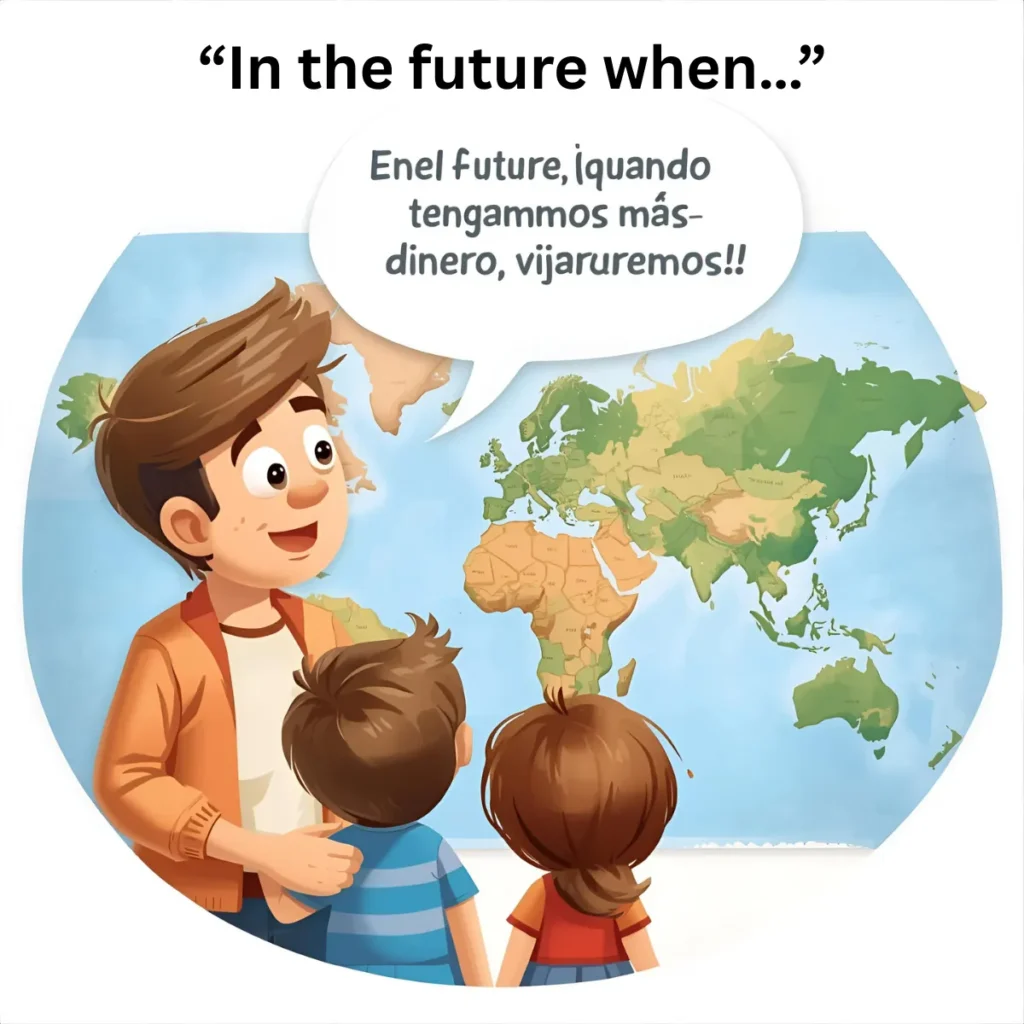
13. En el futuro cuando… – “In the future when…”
Origin
Used to discuss future conditions or hopes.
Example:
👤 A: En el futuro, cuando tengamos más dinero, viajaremos.
👤 B: ¡Sí, a muchos países!
Meaning: “In the future, when we have more money, we’ll travel.” — “Yes, to many countries!”
Use: Common in goal-setting or dream-related talk.
14. Para cuándo… – “By when…”
Origin/Use:
From para (for/by) + cuándo (when). Indicates a deadline or target date.
Example:
👤 A: ¿Para cuándo necesitas el informe?
👤 B: Para mañana por la tarde.
Meaning: “By when do you need the report?” — “By tomorrow afternoon.”
Use: Often used in work or study settings.
15. No sé cuándo… – “I don’t know when…”
Origin/Use:
Used for uncertainty about time. It’s part of indirect speech.
Example:
👤 A: ¿Cuándo vuelves?
👤 B: No sé cuándo, tal vez la próxima semana.
Meaning: “When are you coming back?” — “I don’t know when, maybe next week.”
Use: Expresses doubt or lack of information naturally.
💬 FAQs
1. What does “cuándo” mean in Spanish?
“Cuándo” means “when” and is used in questions to ask about time or events.
Example: ¿Cuándo llegas? — “When are you arriving?”
2. What is the difference between “cuando” and “cuándo”?
The accent mark changes meaning:
- Cuándo = question word (When?)
- Cuando = statement (when something happens)
3. How do you say “since when” in Spanish?
Use ¿Desde cuándo…? — e.g., ¿Desde cuándo trabajas aquí? (“Since when have you worked here?”)
4. What’s the Spanish for “as soon as”?
You can use en cuanto or tan pronto como depending on formality.
5. How do you say “by when” in Spanish?
Say ¿Para cuándo…? — “By when do you need this?”
6. Is “cuando” ever used with the subjunctive?
Yes — when talking about future or uncertain actions.
Example: Cuando tengas tiempo, llámame. (“When you have time, call me.”)
7. What’s the most common mistake learners make with “cuándo”?
Forgetting the accent mark! Always use cuándo with an accent in questions.
Conclusion:
Now you know that learning how to say “when” in Spanish goes beyond just one word. Depending on the situation — a question, a plan, or a memory — you can use different forms like cuándo, cuando, or en cuanto to express yourself clearly.
You’ll sound more fluent and confident whether you’re chatting with locals, writing in Spanish, or traveling abroad. Keep practicing, and soon, using “when” in Spanish will feel completely natural to you.

Sophia Mitchell is a passionate content writer known for creating clear, engaging, and informative articles.
She focuses on delivering well-structured content that is easy for readers to understand and trust.
Sophia Mitchell currently contributes quality writing to repliesnest.com, helping readers find accurate answers quickly.