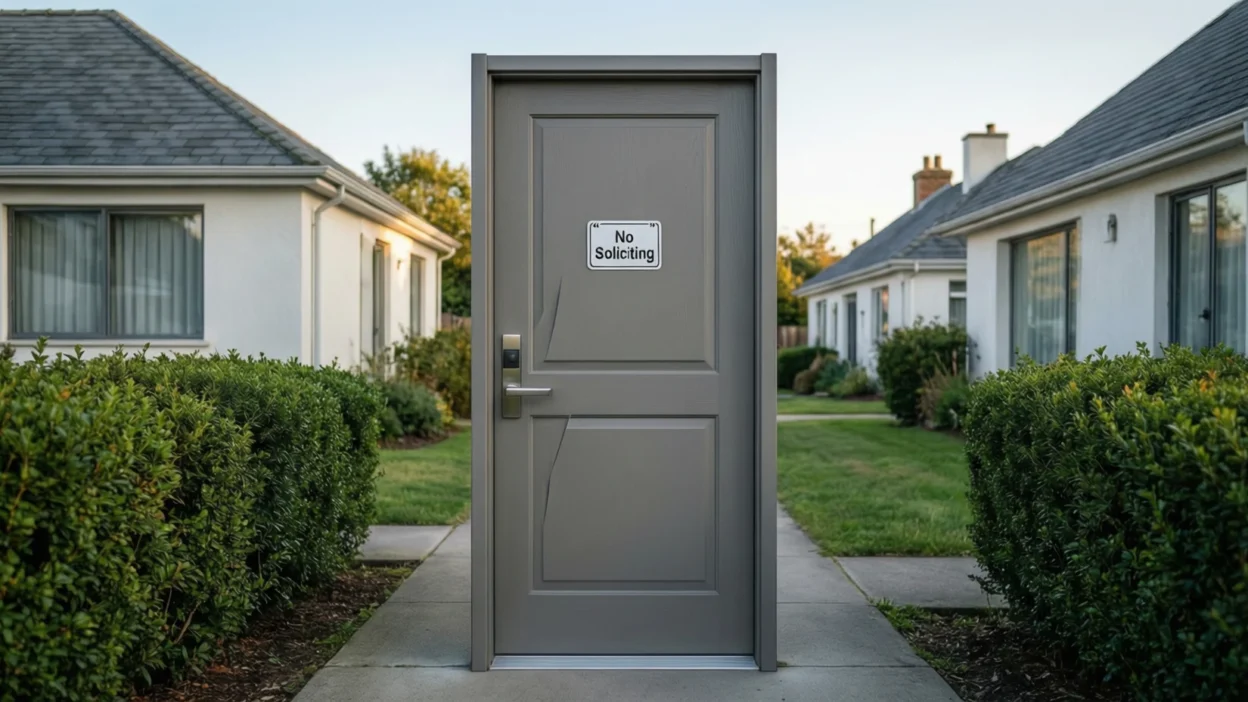
Have you ever seen a “No Soliciting” sign on a door or gate and wondered what it really means? You may see this sign on houses, offices, shops, and buildings. Many people see it every day, but not everyone understands it clearly.
In simple words, no soliciting means “do not ask, sell, or request anything here.” This article explains the meaning in an easy way. It is helpful for students, parents, homeowners, business owners, and general readers.
What Does No Soliciting Mean?
No soliciting means that people are not allowed to come to a place to sell something, ask for money, or promote an idea.
When a sign says No Soliciting, it tells visitors:
- Do not knock to sell products
- Do not ask for donations
- Do not promote services
- Do not request support
It is a clear message that the owner does not want unwanted sales or requests.
Meaning of No Soliciting in Simple Words
In very simple words:
No soliciting means “please do not disturb us with sales or requests.”
It is used to protect:
- Privacy
- Time
- Peace
For example:
- A salesperson knocks to sell internet service ❌
- A fundraiser asks for donations ❌
- A marketer promotes a product ❌
All of these are solicitation.
What Is Solicitation?
Solicitation means asking someone for something.
This can include:
- Selling products
- Offering services
- Asking for donations
- Promoting ideas
- Requesting support
Solicitation can be commercial or non-commercial.
What Is a No Soliciting Sign?
A no soliciting sign is a notice placed on:
- Doors
- Gates
- Walls
- Windows
The sign warns people not to disturb the property owner with requests.
Common sign messages:
- No Soliciting
- No Sales
- No Fundraising
- No Canvassing
What Does No Soliciting Mean on a House?
On a house, no soliciting means the homeowner does not want visitors for sales or requests.
This helps homeowners:
- Avoid interruptions
- Protect children
- Feel safe
Allowed:
- Family and friends
- Delivery services
- Emergency workers
Not allowed:
- Door-to-door sales
- Fundraisers
- Marketers
What Does No Soliciting Mean for Businesses?
For businesses, no soliciting helps keep work running smoothly.
It protects:
- Employees
- Customers
- Business time
Many offices and shops use these signs to stop:
- Sales pitches
- Marketing visits
- Unwanted promotions
No Soliciting vs Door-to-Door Sales
Door-to-door sales is one of the most common forms of solicitation.
Examples:
- Selling internet plans
- Offering cleaning services
- Promoting insurance
A no soliciting sign tells door-to-door sellers to stay away.
Types of Solicitation Covered by No Soliciting
Commercial Solicitation
- Selling products
- Offering paid services
- Business promotions
Non-Commercial Solicitation
- Fundraising
- Religious visits
- Political canvassing
Most no soliciting signs cover both types.
Does No Soliciting Include Salespeople?
Yes. Salespeople are the main group affected by no soliciting signs.
This includes:
- Product sellers
- Service providers
- Marketing agents
If a sign is posted, salespeople should not knock or approach.
Does No Soliciting Include Fundraising?
Yes, in most cases.
Fundraising includes:
- Charity donations
- School fundraisers
- Community collections
Even good causes should respect no soliciting signs.
Does No Soliciting Apply to Religious Groups?
Often, yes.
Religious solicitation includes:
- Sharing beliefs
- Asking to join events
- Requesting donations
Some people misunderstand this, but a no soliciting sign usually applies to everyone.
Does No Soliciting Include Political Canvassing?
Political canvassing means:
- Asking for votes
- Promoting political ideas
- Sharing campaign messages
In many places, no soliciting signs apply to political visits too, depending on local rules.
Is No Soliciting Legally Enforceable?
This depends on local laws.
In many areas:
- Signs are supported by local ordinances
- Ignoring them may lead to warnings or fines
A sign also supports private property rights.
No Soliciting Laws and Local Ordinances
Cities and towns may have:
- Municipal codes
- Solicitation laws
These rules explain:
- When solicitation is allowed
- When it is restricted
- Penalties for violations
Can Police Enforce a No Soliciting Sign?
Yes, in some cases.
Police may act when:
- Local laws support the sign
- Trespassing occurs
- Complaints are made
Enforcement varies by location.
What Happens If You Ignore a No Soliciting Sign?
Possible results include:
- Verbal warning
- Being asked to leave
- Fines
- Legal trouble
Ignoring signs can also damage trust and reputation.
No Soliciting and Private Property Rights
Property owners have the right to:
- Control access
- Protect privacy
- Set rules
A no soliciting sign is a legal way to show these rights.
No Soliciting in Gated Communities
Gated communities often have:
- HOA rules
- Community policies
- Posted signs
Solicitation is usually not allowed without permission.
No Soliciting vs No Trespassing
No Soliciting
- Stops sales and requests
- Allows normal visitors
No Trespassing
- Stops all entry
- Stronger warning
Both protect privacy but in different ways.
No Soliciting vs Do Not Disturb
No Soliciting
- Focuses on sales and requests
Do Not Disturb
- Broader meaning
- Includes all interruptions
Some people use both signs together.
Where Should You Place a No Soliciting Sign?
Best places:
- Front door
- Gate
- Window
- Fence
Tips:
- Make it visible
- Use clear text
- Keep it simple
Why People Use No Soliciting Signs
People use these signs to:
- Save time
- Reduce stress
- Avoid unwanted sales
- Protect family
They are common in busy areas.
Is No Soliciting Helpful for Families?
Yes, very helpful.
Benefits:
- Fewer strangers
- More safety
- Less noise
- Better privacy
Parents often use them to protect children.
Is No Soliciting Fair to Salespeople?
Salespeople depend on their work, but:
- Consent matters
- Respect is important
Modern marketing focuses on permission-based marketing, not interruption.
No Soliciting and Permission-Based Marketing
Permission-based marketing means:
- Customers agree first
- No forced sales
- Respect for choice
This method builds trust and long-term success.
Common Misunderstandings About No Soliciting
Myth 1: It only means “no selling”
❌ Wrong. It includes requests too.
Myth 2: It is rude
❌ It is about privacy, not rudeness.
Myth 3: It is illegal everywhere
❌ Rules depend on location.
Real-Life Examples of No Soliciting
Home Example
A homeowner posts a sign. Salespeople stop knocking.
Business Example
An office avoids interruptions during work hours.
Neighborhood Example
A community stays quiet and safe.
How to Politely Enforce a No Soliciting Policy
Tips:
- Stay calm
- Point to the sign
- Be respectful
- Avoid arguments
Clear signs reduce the need for confrontation.
Who Must Follow No Soliciting Signs?
Everyone, including:
- Salespeople
- Fundraisers
- Canvassers
- Marketers
Respecting signs shows professionalism.
Summary: What Does No Soliciting Really Mean?
No soliciting means no selling, no asking, and no promoting.
It protects privacy, peace, and personal space.
Key points:
- Used by homes and businesses
- Covers sales, fundraising, and promotion
- Supported by property rights and local laws
Conclusion
No soliciting is a simple way to protect privacy, time, and peace. It tells people not to knock, sell, ask for money, or promote services. Homes, businesses, and communities use no soliciting signs to reduce unwanted interruptions and feel safer.
While laws may vary by location, the message is clear respect personal space and consent. Understanding the no soliciting meaning helps everyone communicate better, avoid conflict, and create a more respectful environment.
FAQs
What does no soliciting mean legally?
It means solicitation is restricted, depending on local law.
Can someone knock if they are not selling?
Yes, if they are not soliciting.
Does no soliciting apply to delivery drivers?
No. Deliveries are allowed.
Can renters use no soliciting signs?
Yes, in most cases.
Is no soliciting the same as no trespassing?
No. They have different meanings.

Jack London is a versatile writer with a strong ability to explain ideas in a clear and engaging way.
He focuses on creating informative, easy-to-understand content for a wide range of readers.
Jack London currently writes helpful articles for repliesnest.com, delivering trustworthy and reader-friendly information.