I recently got confused when I saw the term “outstanding balance” on my credit card statement 💳.
At first, I thought it was just another billing term, but then I realized it’s the amount I still owe to the bank or lender. Knowing this balance is super important because it affects my payments, interest, and even credit score 📈.
If you’ve ever wondered what outstanding balance means and how it impacts your finances, you’re not alone. In this guide, I’ll break it down in a simple, relatable way, so you can stay on top of your money without any stress! 💸✨
🧠 What Does Outstanding Balance Mean in Text?
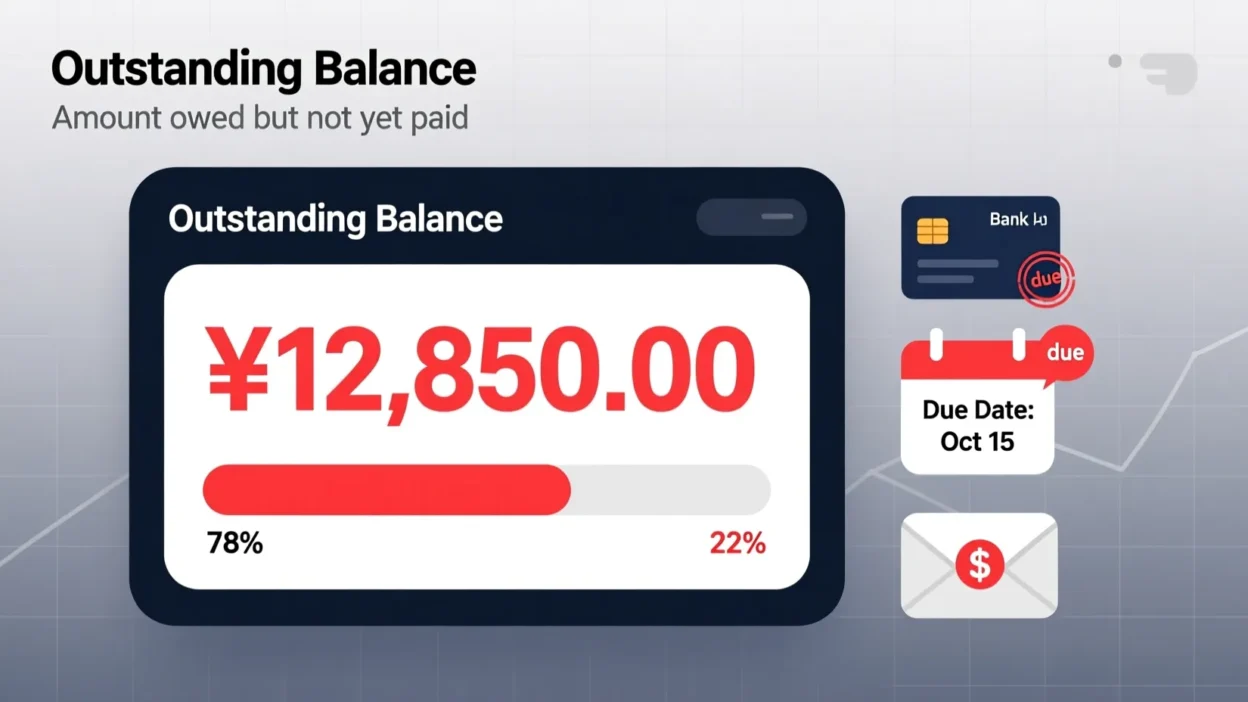
An outstanding balance is the amount of money you still owe on a financial account. This could be from a credit card, loan, utility bill, or any account where payment is due. It doesn’t include future charges just what you currently owe.
Example Sentence:
“I checked my credit card, and my outstanding balance is $245.50.”
In short: Outstanding Balance = Total Unpaid Amount = Money You Still Owe ✅
📱 Where Is Outstanding Balance Commonly Used?
The term outstanding balance is most often used in:
- 🏦 Banking apps & statements – checking your account.
- 💳 Credit card bills – knowing how much you need to pay.
- 🧾 Utility bills – electricity, water, or internet bills.
- 📝 Loan accounts – mortgages, personal loans, or car loans.
Tone & Usage:
- Formal and professional ✅
- Not casual or slang-friendly ❌
- Common in finance-related conversations and messages
💬 Examples of Outstanding Balance in Conversation
Here are some realistic examples of how outstanding balance might appear in text or chat:
Example 1:
A: “Have you settled your credit card payment for this month yet?”
B: “No, I still have an outstanding balance of $120 left.”
2
A: “Can you give me some money for dinner?”
B: “Hmm, I have to take care of my outstanding balance first 😅”
Example 3:
A: “Just a reminder—your electricity bill is due tomorrow.”
B: “Thanks for letting me know, I’ll pay the outstanding balance tonight.”
Example 4:
A: “Why is my bank account showing -$50?”
B: “That’s your outstanding balance from last month.”
Example 5:
A: “Do I need to pay interest if I don’t pay now?”
B: “Yes, unpaid outstanding balances usually accrue interest.”
🕓 When to Use and When Not to Use Outstanding Balance
✅ When to Use
- Discussing unpaid bills or debts
- Sending payment reminders politely
- Talking about financial obligations with friends, family, or coworkers
❌ When Not to Use
- Casual texting with friends about non-financial topics
- Flirty or humorous conversations
- Situations that require urgent, immediate action without context
Comparison Table:
| Context | Example Phrase | Why It Works |
|---|---|---|
| Friend Chat | “Hey, don’t forget your outstanding balance 😅” | Casual reminder, polite |
| Work Chat | “Please review the outstanding balance for this account.” | Professional & formal |
| “The outstanding balance on your invoice is $500. Kindly pay by the due date.” | Clear, formal, and official |
🔄 Similar Slang Words or Alternatives
While outstanding balance is more of a financial term than slang, you may encounter similar phrases in banking or casual financial chats:
| Term/Slang | Meaning | When to Use |
|---|---|---|
| Balance Due | Money owed on a bill | Formal bills & invoices |
| Amount Owed | Total money you still need to pay | Banking apps & statements |
| Unpaid Amount | Any unpaid portion of a bill or loan | Reminder messages, invoices |
| Due Amount | Money required by a specific date | Billing statements, formal notices |
❓ FAQs
Q1: Is an outstanding balance the same as the total debt?
A1: Not always. The outstanding balance refers to the unpaid amount at a specific moment. Your total debt may include future charges or fees.
Q2: Will my outstanding balance affect my credit score?
A2: Yes, unpaid balances on credit cards or loans can impact your credit score if not paid on time.
Q3: How do I pay my outstanding balance?
A3: You can pay online, through your bank, via mobile apps, or in person, depending on the provider.
Q4: What happens if I don’t pay my outstanding balance?
A4: Late fees, interest charges, and potential negative marks on your credit report.
Q5: Can outstanding balances be zero?
A5: Yes, if you’ve paid everything due, your outstanding balance becomes $0.
Conclusion
Understanding the term outstanding balance is essential for managing your finances responsibly. If it’s a credit card, loan, or utility bill, this phrase tells you exactly how much you still owe.
While it’s formal and professional, seeing it regularly can help you stay on top of payments and avoid late fees.
Always check your statements, pay attention to due dates, and know that your outstanding balance = total unpaid amount = money you still owe. 💳💡

Sophia Mitchell is a passionate content writer known for creating clear, engaging, and informative articles.
She focuses on delivering well-structured content that is easy for readers to understand and trust.
Sophia Mitchell currently contributes quality writing to repliesnest.com, helping readers find accurate answers quickly.