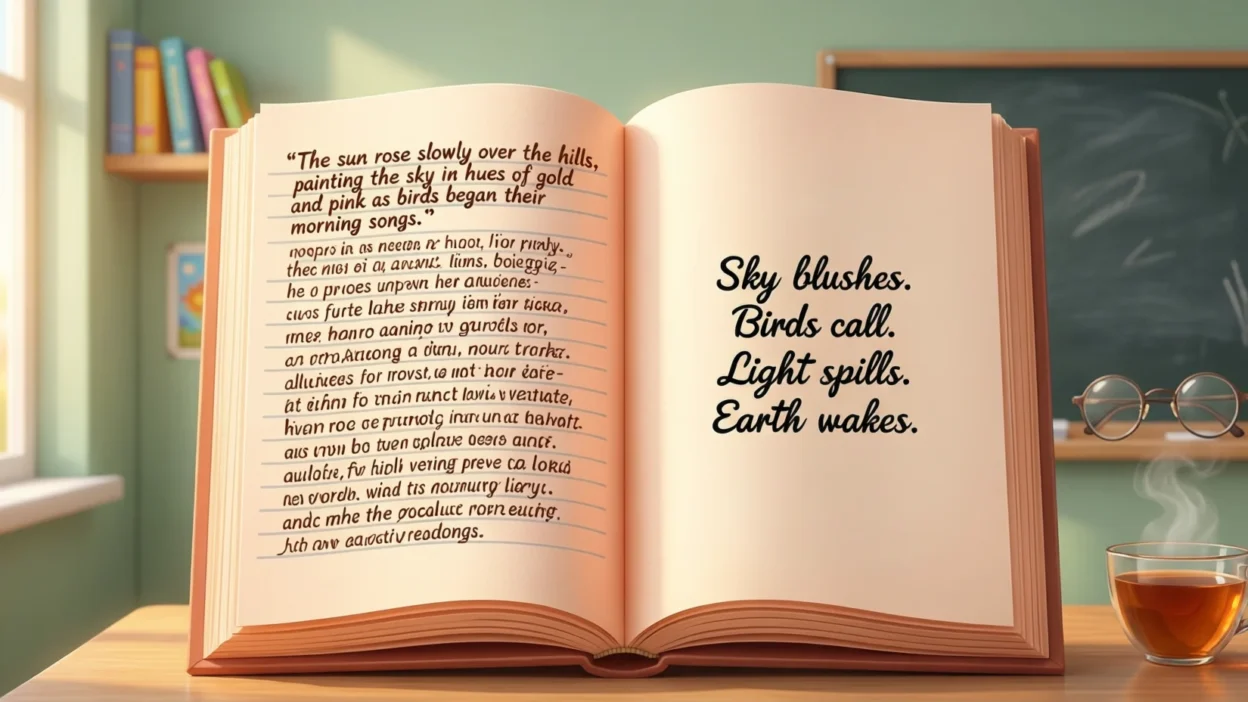
Prose is normal writing that uses full sentences and paragraphs.
It does not follow rhyme or rhythm like poetry.
Most books, stories, essays, and articles are written in prose.
When you read a story, a textbook, or an essay, you are reading prose.
Prose is the most common way people write and speak.
It sounds natural, just like everyday language.
Understanding prose helps students read better and write clearly.
What Is Prose in Literature?
In literature, prose means writing that flows naturally.
It follows normal grammar rules.
It uses sentences and paragraphs instead of lines and stanzas.
Most novels, short stories, and essays are written in prose.
Writers use prose to tell stories, explain ideas, and share thoughts.
Prose Meaning in Simple Words
In simple words, prose is normal writing.
It is how we write letters, emails, and school work.
There is no music pattern or rhyme rule.
If writing sounds like everyday speech, it is prose.
Definition of Prose
Prose is a form of language written in sentences and paragraphs.
It follows natural speech patterns.
It is used in both creative and factual writing.
Prose vs Poetry
They are different.
Prose
- Written in sentences
- Uses paragraphs
- Sounds natural
- No rhyme needed
Poetry
- Written in lines
- Often has rhythm
- May rhyme
- Uses special patterns
Both are important, but prose is used more often.
Prose vs Verse
Verse is usually another word for poetry.
Verse follows meter and rhythm.
Prose does not follow any fixed pattern.
That is why novels are written in prose, not verse.
Prose vs Drama
Drama is written for the stage.
It uses dialogue and actions.
Prose tells a story with description and narration.
Plays focus on speaking.
Prose focuses on storytelling.
Characteristics of Prose
Prose has clear features:
- Written in full sentences
- Arranged in paragraphs
- Uses grammar and punctuation
- Follows natural speech
- Easy to read and understand
These features make prose simple and useful.
Types of Prose
There are many types of prose.
Each type has a different purpose.
Some tell stories.
Some explain facts.
Fiction Prose
Fiction prose tells made-up stories.
It includes novels and short stories.
It has characters, plot, and setting.
Examples:
- Fairy tales
- Adventure stories
- Mystery novels
Non-Fiction Prose
Non-fiction prose is based on facts.
It gives real information.
Examples:
- Textbooks
- Biographies
- News articles
This type of prose teaches and informs.
Narrative Prose
Narrative prose tells a story.
It has a beginning, middle, and end.
Events happen in order.
Most stories you read use narrative prose.
Descriptive Prose
Descriptive prose paints a picture with words.
It helps readers imagine scenes.
It uses details about sight, sound, and feeling.
Writers use it to make writing interesting.
Expository Prose
Expository prose explains something.
It gives facts and information.
It is clear and direct.
School books often use this type.
Persuasive Prose
Persuasive prose tries to change opinions.
It gives reasons and examples.
It is used in speeches and opinion essays.
Structure of Prose Writing
Prose writing has structure:
- Sentences form ideas
- Paragraphs group ideas
- Ideas flow in order
Good structure makes writing easy to read.
Prose Writing Style
Prose style can be simple or formal.
It depends on the purpose.
Stories use friendly language.
Essays use clear and formal words.
Good prose always sounds natural.
Examples of Prose
Here is a simple prose sentence:
The sun was bright, and the children played outside.
Here is a short prose paragraph:
The dog ran across the yard. It barked loudly and wagged its tail. Everyone laughed and watched it play.
Prose in Novels
Novels are written in prose.
Authors use prose to build characters.
They describe places and events.
Without prose, novels would not exist.
Prose in Essays
Essays use prose to explain ideas.
Students write essays in prose form.
Clear prose helps teachers understand answers.
That is why prose is important in exams.
Prose in Short Stories
Short stories use prose to tell quick tales.
They are short but powerful.
Every word matters.
Prose helps writers share meaning in few words.
Prose in English Literature
English literature uses prose widely.
Classic and modern writers use prose.
It helps share culture, history, and ideas.
Prose made literature easier for common readers.
Prose Meaning for Students
For students, prose means normal writing.
It is used in textbooks and exams.
Learning prose improves reading and writing skills.
Understanding prose helps students score better.
Prose Definition for Kids
For kids, prose is simple writing.
It looks like a story or a paragraph.
It does not rhyme like poems.
Storybooks are full of prose.
Why Prose Is Important
Prose is important because:
- It helps communication
- It shares ideas clearly
- It tells stories
- It teaches information
Without prose, learning would be difficult.
Common Misunderstandings About Prose
Many people think prose is boring.
That is not true.
Stories, novels, and jokes are prose.
Prose can be fun, creative, and powerful.
How to Identify Prose
You can identify prose easily:
- Look for paragraphs
- Check for full sentences
- See if it sounds natural
If yes, it is prose.
Prose in Daily Life
We use prose every day:
- Emails
- Messages
- News
- Blogs
Even this article is written in prose.
Related Literary Terms
Prose often includes:
- Plot
- Characters
- Theme
- Setting
- Narration
These help build meaning in writing.
FAQs About Prose
What does prose mean in English?
Prose means normal writing using sentences and paragraphs.
Is prose the same as a story?
Not always. Stories are written in prose, but essays are also prose.
Can prose be creative?
Yes. Stories and novels are creative prose.
Is prose used in exams?
Yes. Most exam answers are written in prose.
What are examples of prose?
Novels, essays, textbooks, and articles are prose.
Conclusion
Prose is the most common form of writing. It uses natural language and clear sentences. We see prose in books, schools, and daily life. Understanding prose helps everyone read, write, and communicate better.

Liam Bennett is a dedicated content writer who creates clear, engaging, and well-structured articles.
He focuses on delivering practical information that is easy for readers to understand and apply.
Liam Bennett currently writes high-quality content for repliesnest.com, ensuring clarity and reliability.