Learning how to say good afternoon in French helps you sound polite, friendly, and confident when speaking to native speakers. The most common phrase is “Bon après-midi” (pronounced bohn ah-pray-mee-dee). It’s a polite and pleasant way to greet someone during the afternoon.
Whether you’re traveling in France, meeting French friends, or learning the language, these expressions will help you make a great impression. Let’s explore 15 beautiful ways to say good afternoon in French — with examples, origins, and when to use each one.
Say Good Afternoon in French
Let’s explore 15 beautiful ways to say good afternoon in French — with examples, origins, and when to use each one.
15 phrases table for How to Say Good Afternoon in French
| # | French Phrase | Meaning / Use | Example |
|---|---|---|---|
| 1 | Bonjour | Most common way to say “Good day” or “Good afternoon.” | 👤 A: Bonjour, Marie ! 👤 B: Bonjour ! |
| 2 | Bon après-midi | Literally “Good afternoon,” polite and formal. | 👤 A: Je pars. 👤 B: Bon après-midi ! |
| 3 | Salut | Casual “Hi” used with friends. | 👤 A: Salut, Lucie ! 👤 B: Salut ! |
| 4 | Coucou | Playful “Hey there.” | 👤 A: Coucou ! 👤 B: Salut ! |
| 5 | Bonne journée | “Have a good day.” | 👤 A: Merci ! 👤 B: Bonne journée ! |
| 6 | Bonsoir | “Good evening,” used later in the day. | 👤 A: Bonsoir, Paul ! 👤 B: Bonsoir ! |
| 7 | Allô | “Hello” on the phone. | 👤 A: Allô ? 👤 B: Allô, Sophie ici. |
| 8 | Ça va ? | “How are you?” casual greeting. | 👤 A: Salut ! Ça va ? 👤 B: Oui, et toi ? |
| 9 | Enchanté(e) | “Nice to meet you.” | 👤 A: Bonjour, je suis Marc. 👤 B: Enchanté ! |
| 10 | Bonne continuation | “Take care / Keep going.” | 👤 A: À plus tard ! 👤 B: Bonne continuation ! |
| 11 | Comment allez-vous ? | Formal “How are you?” | 👤 A: Bonjour, comment allez-vous ? 👤 B: Très bien. |
| 12 | Rebonjour | “Hello again.” | 👤 A: Rebonjour, Claire ! 👤 B: Ah, rebonjour ! |
| 13 | Bon retour | “Have a safe trip back.” | 👤 A: Merci, bon retour ! 👤 B: À bientôt ! |
| 14 | Bonne fin d’après-midi | “Have a nice rest of the afternoon.” | 👤 A: Je pars. 👤 B: Bonne fin d’après-midi ! |
| 15 | Bienvenue | “Welcome.” | 👤 A: Bienvenue à Paris ! 👤 B: Merci ! |
1. Bon après-midi
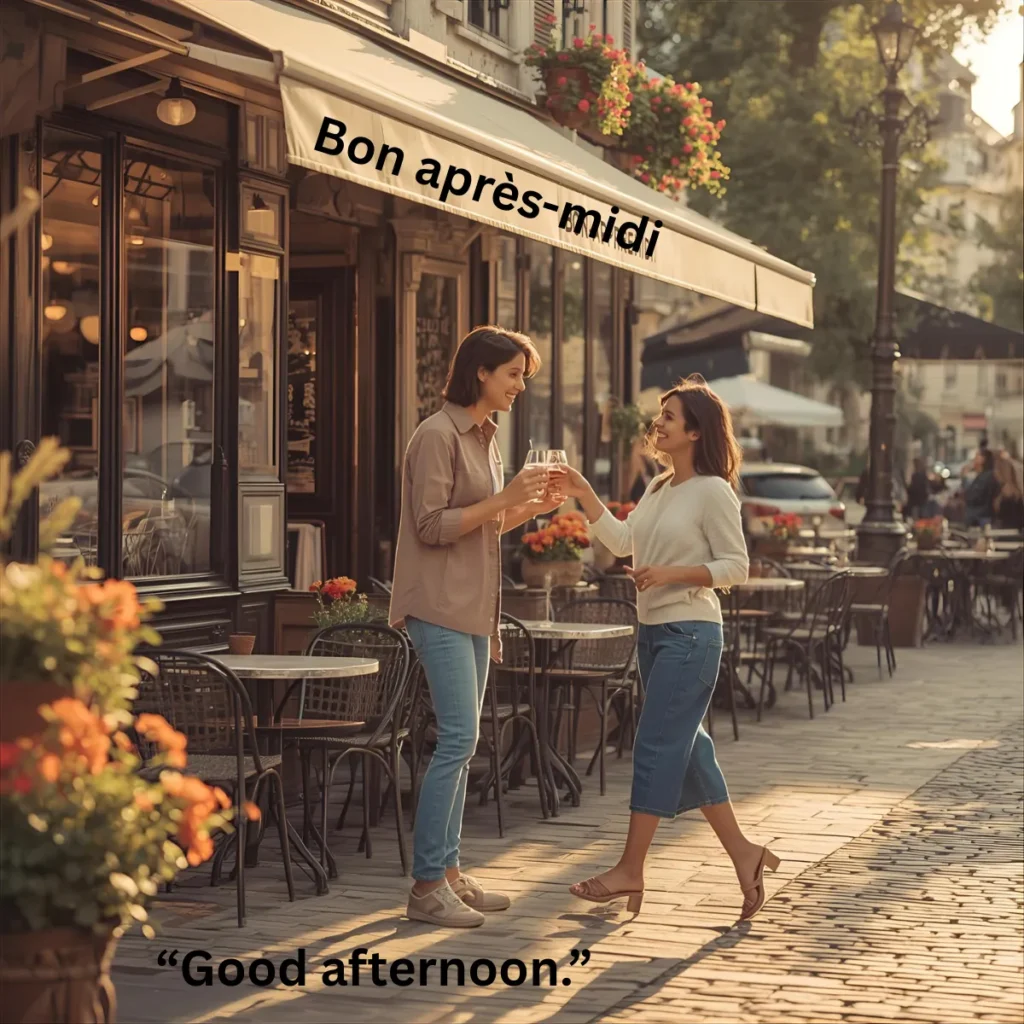
Origin: The standard way to say “Good afternoon” in French. Literally means “good after-midday.”
Example:
👤 A: Bonjour, comment ça va ?
👤 B: Très bien, merci. Bon après-midi !
Use: Neutral and polite greeting used from noon to evening.
2. Passe un bon après-midi
Origin: Means “Have a good afternoon.”
Example:
👤 A: Je dois partir maintenant.
👤 B: D’accord, passe un bon après-midi !
Use: Informal and friendly; used when saying goodbye.
3. Passez un bon après-midi

Origin: The formal version of “Have a good afternoon.”
Example:
👤 A: Merci pour votre aide.
👤 B: Avec plaisir. Passez un bon après-midi.
Use: Polite and professional tone; great for work or customer service.
4. Bonne journée
Origin: Means “Have a good day.” Often used instead of “Good afternoon.”
Example:
👤 A: À bientôt !
👤 B: Merci, bonne journée !
Use: Common closing phrase during the day.
5. Bonsoir
Origin: Literally “Good evening.” In France, it can also be used late in the afternoon.
Example:
👤 A: Il est déjà 18h.
👤 B: Bonsoir, comment allez-vous ?
Use: Used from around 5–6 p.m. onward.
6. Salut
Origin: Casual French word meaning both “Hi” and “Bye.”
Example:
👤 A: Salut, tu vas bien ?
👤 B: Oui, super !
Use: Informal and friendly; for friends or peers.
7. Coucou
Origin: Cute and playful greeting, similar to “Hey there!”
Example:
👤 A: Coucou, tu fais quoi cet après-midi ?
👤 B: Pas grand-chose, et toi ?
Use: Very casual, used with close friends or kids.
8. À cet après-midi
Origin: Means “See you this afternoon.”
Example:
👤 A: On se voit plus tard ?
👤 B: Oui, à cet après-midi !
Use: Used when meeting someone again later that day.
9. À plus tard
Origin: Means “See you later.”
Example:
👤 A: Je file au travail.
👤 B: Ok, à plus tard !
Use: Common and casual goodbye phrase.
10. À tout à l’heure
Origin: Literally “See you in a little while.”
Example:
👤 A: Je reviens après le déjeuner.
👤 B: D’accord, à tout à l’heure !
Use: Polite and friendly; used when you’ll meet again soon.
11. Profite bien de ton après-midi

Origin: Means “Enjoy your afternoon.”
Example:
👤 A: Tu fais quoi aujourd’hui ?
👤 B: Rien de spécial. Profite bien de ton après-midi !
Use: Caring and warm; often used among friends or family.
12. Bon moment
Origin: Means “Have a good time” or “Enjoy the moment.”
Example:
👤 A: Je vais au parc.
👤 B: Bon moment alors !
Use: Light and casual expression.
13. Je te souhaite un bon après-midi
Origin: Literally “I wish you a good afternoon.”
Example:
👤 A: Merci pour le café.
👤 B: De rien. Je te souhaite un bon après-midi.
Use: Polite and heartfelt; sounds natural and kind.
14. Belle après-midi
Origin: “Belle” means “beautiful.” This phrase means “Beautiful afternoon.”
Example:
👤 A: À bientôt !
👤 B: Merci, belle après-midi à toi !
Use: Warm and charming; often used by women or in messages.
15. Passe une excellente après-midi
Origin: Means “Have an excellent afternoon.”
Example:
👤 A: Merci pour tout.
👤 B: Avec plaisir, passe une excellente après-midi !
Use: Formal or enthusiastic; perfect for kind farewells.
FAQs
1. What is the correct way to say good afternoon in French?
The standard phrase is “Bon après-midi.”
2. How do you pronounce “Bon après-midi”?
It’s pronounced bohn ah-pray-mee-dee.
3. What time can you say “Bon après-midi”?
You can use it between 12 p.m. and around 6 p.m.
4. Is “Bon après-midi” formal or informal?
It’s neutral — suitable for both casual and polite conversations.
5. What’s the difference between “Bon après-midi” and “Bonne journée”?
Bon après-midi means “Good afternoon,” while Bonne journée means “Have a good day.”
6. Do French people actually say “Bon après-midi”?
Yes, but it’s less common than Bonne journée in casual speech.
7. How do you say “Have a good afternoon” formally in French?
You can say “Passez un bon après-midi.”
8. How do you say “Enjoy your afternoon”?
Say “Profite bien de ton après-midi.”
9. Can “Bonsoir” mean “Good afternoon”?
In late afternoon (after 5 p.m.), “Bonsoir” becomes acceptable.
10. How do you respond to “Bon après-midi”?
You can reply simply with “Merci, à vous aussi !” (Thanks, you too!).
Conclusion:
Saying good afternoon in French isn’t just about timing — it’s about tone and warmth. Whether you use Bon après-midi or Passe une excellente après-midi, these phrases show respect, friendliness, and cultural understanding. Mastering small greetings like this can make your French sound elegant and natural.

Sophia Mitchell is a passionate content writer known for creating clear, engaging, and informative articles.
She focuses on delivering well-structured content that is easy for readers to understand and trust.
Sophia Mitchell currently contributes quality writing to repliesnest.com, helping readers find accurate answers quickly.