Learning how to say good afternoon in Spanish is a simple way to sound polite and friendly when greeting others. The most common phrase is “Buenas tardes,” which works in almost any situation—from casual chats to formal meetings. Using it shows respect and warmth, helping you connect naturally with Spanish speakers.
Whether you’re traveling, studying, or chatting online, knowing this phrase makes your Spanish feel more real and confident.
Say Good Afternoon in Spanish
Here’s the short version of the 15 phrases table for “How to Say Good Afternoon in Spanish” 👇
| No. | Spanish Phrase | Meaning | Use |
|---|---|---|---|
| 1 | Buenas tardes | Good afternoon | Standard polite greeting |
| 2 | Muy buenas | Good day | Casual and friendly |
| 3 | Que tengas una buena tarde | Have a nice afternoon | Kind and polite |
| 4 | Disfruta la tarde | Enjoy the afternoon | Informal and cheerful |
| 5 | Pase una buena tarde | Have a good afternoon | Formal setting |
| 6 | Buenas tardes a todos | Good afternoon everyone | Group greeting |
| 7 | Que pases una excelente tarde | Have an excellent afternoon | Friendly tone |
| 8 | Feliz tarde | Happy afternoon | Short and warm |
| 9 | Que disfrutes tu tarde | Enjoy your afternoon | Casual and kind |
| 10 | Buenas tardes, señor/señora | Good afternoon, sir/ma’am | Respectful |
| 11 | Linda tarde | Lovely afternoon | Poetic tone |
| 12 | Que tengas linda tarde | Have a lovely afternoon | Warm and kind |
| 13 | Excelente tarde | Excellent afternoon | Expressive and casual |
| 14 | Buenas tardes, amigos | Good afternoon, friends | Friendly greeting |
| 15 | Que la pases bien esta tarde | Have a good time this afternoon | Caring and friendly |
Let’s explore 15 ways to say good afternoon in Spanish, complete with their origins, real-life examples, and how to use each in daily life.
1. Buenas tardes
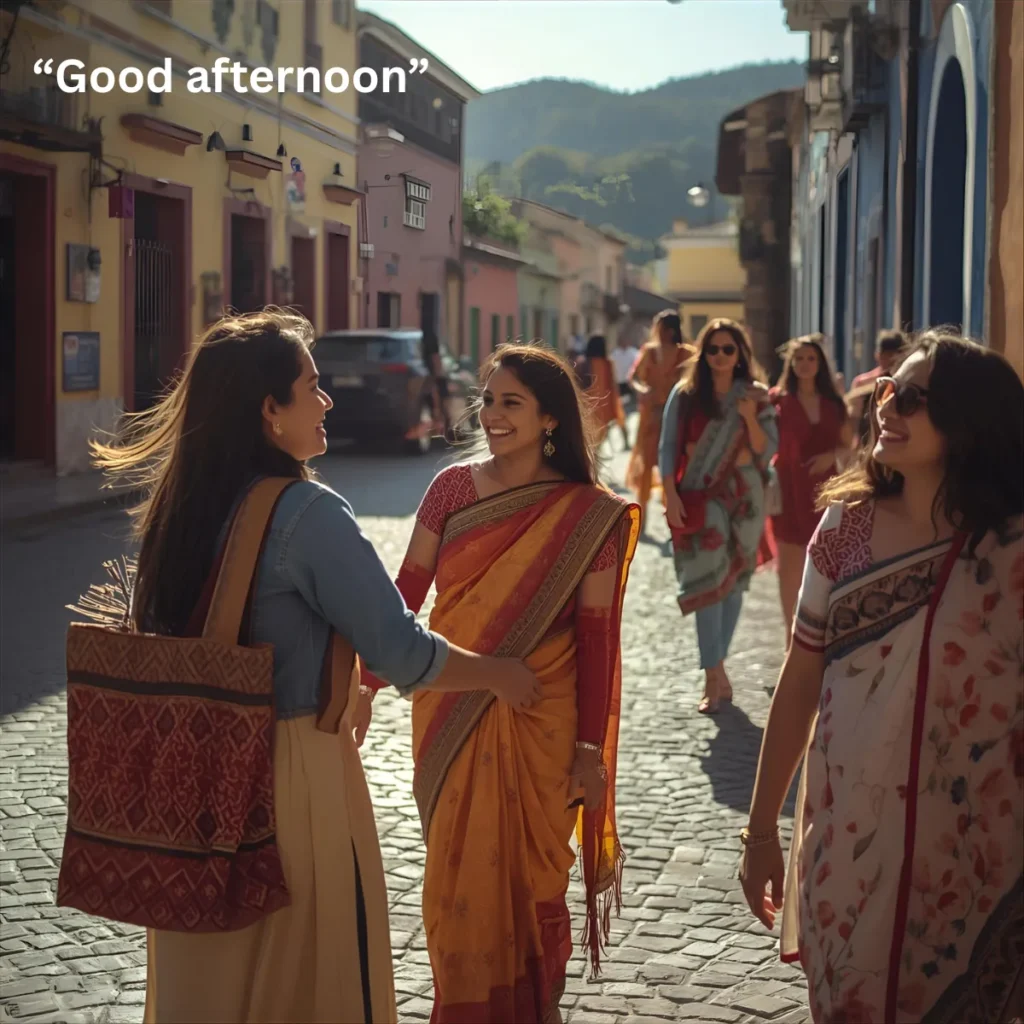
Origin: The most common way to say “Good afternoon” in Spanish. Literally means “Good afternoons.”
Example:
👤 A: Hola, ¿cómo estás?
👤 B: Muy bien, gracias. ¡Buenas tardes!
Use: Standard polite greeting between 12 p.m. and sunset.
2. Muy buenas tardes
Origin: Adds emphasis with muy (very). Used to sound warmer or more cheerful.
Example:
👤 A: ¡Muy buenas tardes a todos!
👤 B: ¡Buenas tardes!
Use: Friendly or formal openings in meetings or gatherings.
3. Tardes
Origin: A short version of buenas tardes.
Example:
👤 A: Tardes, ¿todo bien?
👤 B: Todo perfecto, gracias.
Use: Very casual and used among friends or coworkers.
4. Buenas tardes, amigo
Origin: Adds a friendly tone by including amigo (friend).
Example:
👤 A: Buenas tardes, amigo. ¿Cómo va el día?
👤 B: Todo bien, gracias.
Use: Warm, informal greeting for friends or close people.
5. Buenas tardes a todos

Origin: Means “Good afternoon, everyone.”
Example:
👤 A: Buenas tardes a todos. Bienvenidos a la reunión.
👤 B: Gracias, igualmente.
Use: Common in group or public settings.
6. Que tengas una buena tarde
Origin: Means “Have a good afternoon.”
Example:
👤 A: Me voy ya.
👤 B: Ok, que tengas una buena tarde.
Use: Used when saying goodbye politely.
7. Pase una buena tarde
Origin: Formal version of “Have a good afternoon.”
Example:
👤 A: Gracias por su ayuda.
👤 B: De nada, pase una buena tarde.
Use: Polite expression for customers or elders.
8. Que disfrutes tu tarde
Origin: Literally means “Enjoy your afternoon.”
Example:
👤 A: Terminé el trabajo.
👤 B: ¡Genial! Que disfrutes tu tarde.
Use: Friendly and caring, often used between friends.
9. Linda tarde
Origin: Linda means “pretty” or “nice,” used to wish someone a pleasant time.
Example:
👤 A: Hasta luego.
👤 B: Gracias, linda tarde.
Use: Gentle and sweet way to say goodbye.
10. Espero que tu tarde sea genial
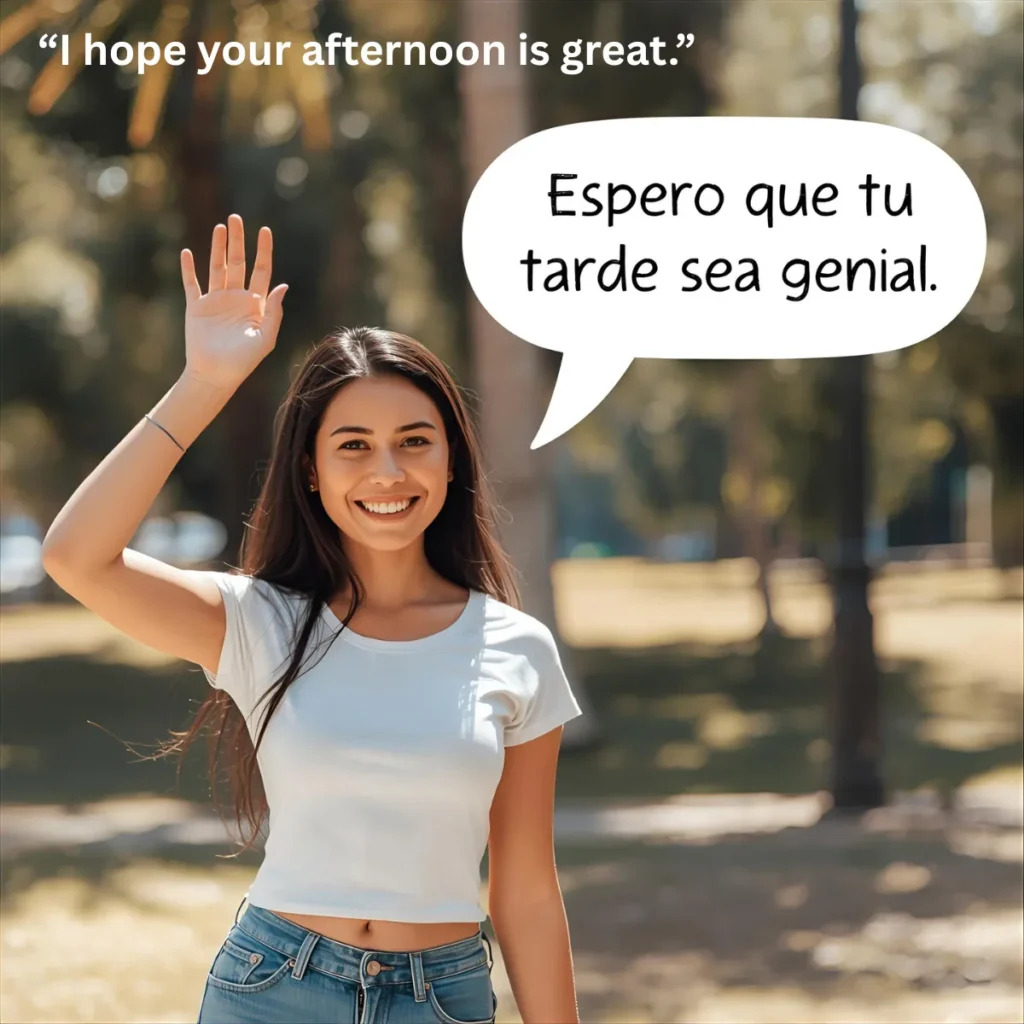
Origin: Means “I hope your afternoon is great.”
Example:
👤 A: Nos vemos más tarde.
👤 B: ¡Claro! Espero que tu tarde sea genial.
Use: Warm and personal tone for friends or loved ones.
11. Buenas tardes, ¿cómo estás?
Origin: Combines greeting with a friendly question.
Example:
👤 A: Buenas tardes, ¿cómo estás hoy?
👤 B: Muy bien, gracias.
Use: Common and polite daily interaction.
12. Buenas tardes, señorita
Origin: Adds respect using señorita (miss).
Example:
👤 A: Buenas tardes, señorita García.
👤 B: Buenas tardes.
Use: Formal greeting for women.
13. Buenas tardes, caballero
Origin: Caballero means “gentleman.”
Example:
👤 A: Buenas tardes, caballero.
👤 B: Buenas tardes.
Use: Polite greeting for men in stores or service settings.
14. Te deseo una tarde maravillosa
Origin: Translates as “I wish you a wonderful afternoon.”
Example:
👤 A: Cuídate.
👤 B: Gracias, te deseo una tarde maravillosa.
Use: Kind, emotional, and caring expression.
15. Buenas tardes, bienvenido
Origin: Means “Good afternoon, welcome.”
Example:
👤 A: Buenas tardes, bienvenido a nuestro restaurante.
👤 B: Gracias, se ve muy acogedor aquí.
Use: Common when greeting guests or customers.
FAQs
1. What is the correct way to say good afternoon in Spanish?
The most common phrase is “Buenas tardes.”
2. How do you pronounce “Buenas tardes”?
It’s pronounced BWEH-nas TAR-des.
3. What time can you say “Buenas tardes”?
You say it from around 12 p.m. until sunset.
4. Is “Buenas tardes” formal or informal?
It’s neutral — polite enough for formal use and friendly enough for casual talk.
5. Can you just say “Tardes”?
Yes, it’s an informal short version used among friends.
6. How do you say “Have a good afternoon” in Spanish?
You can say “Que tengas una buena tarde.”
7. How do you respond to “Buenas tardes”?
Simply reply “Buenas tardes” back with a smile.
8. What’s the difference between “Buenos días” and “Buenas tardes”?
Buenos días means “Good morning,” while Buenas tardes means “Good afternoon.”
9. How do you say “Good evening” in Spanish?
You can say “Buenas noches.”
10. Is “Buenas tardes” used in all Spanish-speaking countries?
Yes! It’s universally understood and used across all Spanish-speaking regions.
Conclusion:
Saying good afternoon in Spanish with buenas tardes is more than just polite—it’s cultural warmth in action. Whether you’re traveling, learning Spanish, or meeting new people, these phrases help you connect respectfully and naturally. A simple greeting can truly brighten someone’s day!