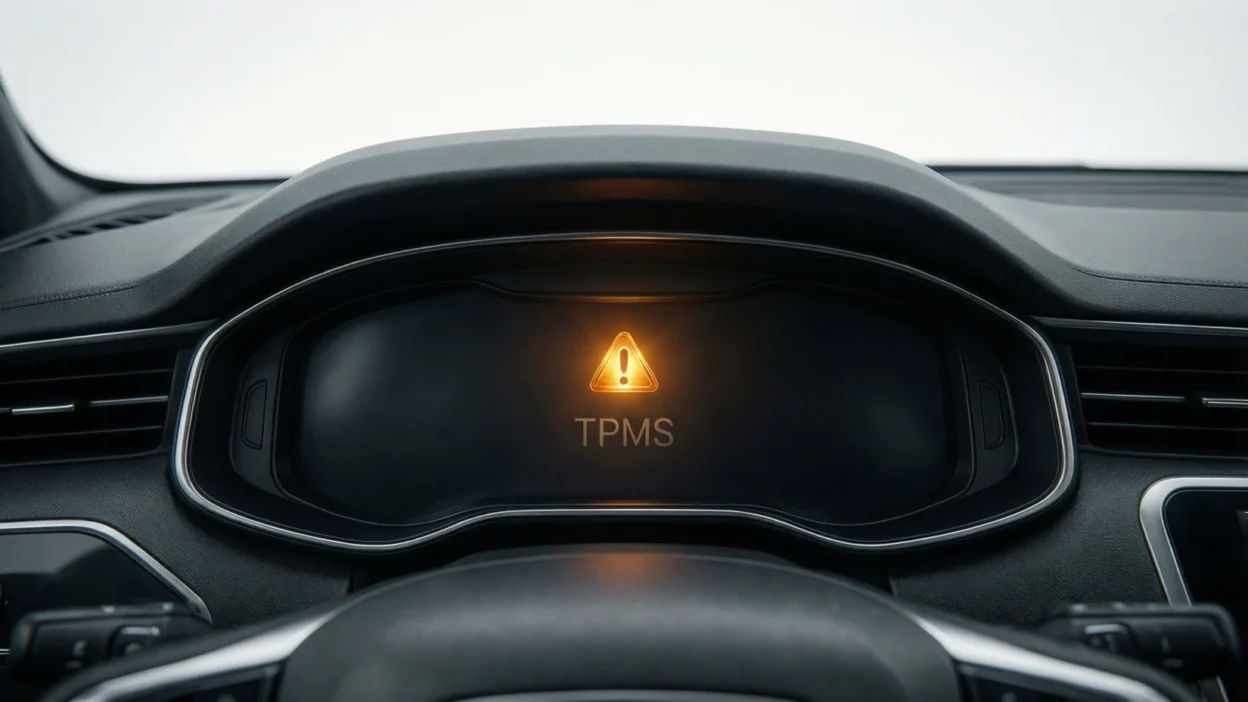
TPMS is a small system with a big job. It helps drivers stay safe on the road. Many people see the TPMS light on the dashboard but do not know what it means.
This article explains TPMS in very simple words. You will learn how it works, why it matters, and how it protects your tires, fuel, and safety.
If you drive a car, understanding TPMS is important for everyday driving.
What Does TPMS Mean?
TPMS means Tire Pressure Monitoring System.
It is a safety system in cars.
It checks the air pressure in your tires.
If the pressure is too low, it warns you.
The warning appears on the dashboard.
It looks like a flat tire with an exclamation mark.
TPMS helps keep you safe on the road.
Why TPMS Is Important
Tires carry the full weight of your car.
If tire pressure is wrong, problems start fast.
Low tire pressure can cause:
- Poor control
- Longer braking time
- Tire damage
- Accidents
TPMS helps stop these problems early.
It alerts you before danger grows.
How TPMS Works
TPMS uses sensors.
These sensors check tire pressure.
When pressure drops:
- The system sends data
- The car computer reads it
- A warning light turns on
This happens while you drive.
You do not need to stop the car.
Where TPMS Sensors Are Located
TPMS sensors are found:
- Inside the tire
- On the valve stem
- Near the wheel
Most sensors are battery powered.
They last 5 to 10 years.
When the battery dies, the sensor stops working.
Types of TPMS
There are two main types of TPMS.
1. Direct TPMS
Direct TPMS uses real sensors.
These sensors:
- Measure tire pressure directly
- Send exact PSI numbers
- Are very accurate
Most modern cars use direct TPMS.
2. Indirect TPMS
Indirect TPMS works differently.
It does not measure air pressure.
It uses wheel speed sensors.
If one tire spins faster, the system detects it.
This means pressure may be low.
Indirect TPMS is cheaper.
But it is less accurate.
What Is PSI?
PSI means Pounds per Square Inch.
It shows how much air is in the tire.
Each car has a recommended PSI.
You can find it:
- Inside the driver door
- In the owner’s manual
Always follow the recommended PSI.
TPMS Warning Light Meaning
The TPMS warning light is easy to spot.
It looks like:
- A tire shape
- With an exclamation mark
Solid TPMS Light
- Tire pressure is low
- Air needs to be added
Flashing TPMS Light
- Sensor problem
- System needs repair
Never ignore this light.
Is It Safe to Drive with TPMS Light On?
Short answer: Not for long.
You may drive a short distance.
But you should check tires soon.
Driving too long can cause:
- Tire blowout
- Loss of control
- Poor braking
Safety comes first.
TPMS and Vehicle Safety
TPMS is part of car safety systems.
It helps with:
- Better grip
- Better braking
- Better balance
Correct tire pressure keeps your car stable.
TPMS supports safer driving every day.
TPMS and Fuel Efficiency
Low tire pressure wastes fuel.
Soft tires create more friction.
The engine works harder.
With correct pressure:
- Fuel use improves
- Money is saved
- Engine life increases
TPMS helps you save fuel.
TPMS and Tire Wear
Wrong tire pressure causes uneven wear.
Underinflated tires:
- Wear on edges
- Heat up fast
Overinflated tires:
- Wear in the center
- Lose grip
TPMS helps tires last longer.
Recommended Tire Pressure Explained
Every car is different.
Recommended tire pressure depends on:
- Car weight
- Tire size
- Load capacity
Do not guess.
Always follow the car label.
Underinflated Tires Risks
Low air pressure is dangerous.
It can cause:
- Tire overheating
- Tire blowout
- Poor steering
- Longer stopping distance
TPMS helps prevent these risks.
Overinflated Tires Risks
Too much air is also bad.
It can cause:
- Hard ride
- Reduced traction
- Faster tire wear
TPMS warns you when pressure changes.
TPMS Legal Requirements
In many countries, TPMS is required by law.
In the United States:
- TPMS became mandatory after 2007
- The law is based on safety rules
The goal is simple:
- Fewer accidents
- Better tire safety
What Is the TREAD Act?
The TREAD Act is a safety law.
It was created after tire accidents.
It requires tire pressure monitoring.
TPMS helps meet this law’s goals.
Role of NHTSA
NHTSA stands for:
National Highway Traffic Safety Administration
It sets safety standards for cars.
TPMS is part of these standards.
The focus is driver safety.
TPMS Reset Explained
Sometimes the TPMS light stays on.
This happens after:
- Tire change
- Tire rotation
- Sensor replacement
A TPMS reset is needed.
How to Reset TPMS
Methods vary by car.
Common ways include:
- Button reset
- Driving reset
- Using car menu
- Using scan tool
Check the owner’s manual.
TPMS Relearn Procedure
Relearn means teaching the system.
It tells the car:
- Sensor position
- Sensor ID
This is needed after sensor replacement.
TPMS Sensor Replacement
Sensors do not last forever.
They may fail due to:
- Dead battery
- Physical damage
- Age
Replacement cost varies.
Usually includes parts and labor.
TPMS Calibration
Calibration keeps readings accurate.
It ensures:
- Correct PSI detection
- Proper warning timing
Calibration is often done after repairs.
TPMS and Tire Rotation
Tires are rotated to wear evenly.
After rotation:
- Sensor positions change
- TPMS relearn is needed
This keeps alerts accurate.
TPMS and Wheel Alignment
Wheel alignment affects tire wear.
Bad alignment:
- Confuses TPMS readings
- Causes uneven pressure
Proper alignment supports TPMS accuracy.
TPMS and Car Maintenance
TPMS supports regular car care.
It helps drivers:
- Notice tire issues early
- Avoid breakdowns
- Save money
But it does not replace manual checks.
TPMS Myths Explained
Myth 1: TPMS Replaces Tire Checks
False.
You should still check tires monthly.
Myth 2: TPMS Prevents All Tire Problems
False.
It only monitors pressure.
Myth 3: TPMS Is Always Accurate
Mostly true.
But sensors can fail.
TPMS in Modern Cars
Most modern cars have TPMS.
Electric and hybrid cars also use it.
TPMS works with:
- Car computers
- Diagnostic systems
- Safety alerts
It is part of smart vehicle design.
Future of TPMS Technology
TPMS is improving fast.
Future systems may include:
- Real-time pressure display
- Mobile app alerts
- Better sensor life
Safety will continue to improve.
Common TPMS Problems
Some common issues include:
- Dead sensor battery
- Broken sensor
- Warning light errors
Most problems are easy to fix.
When to See a Mechanic
Visit a mechanic if:
- TPMS light keeps flashing
- Reset does not work
- Sensor error appears
Ignoring problems can cost more later.
Conclusion
TPMS plays an important role in vehicle safety. It watches your tire pressure and warns you before problems get serious. Correct tire pressure helps your car handle better, stop faster, and use less fuel.
While TPMS does not replace regular tire checks, it gives drivers peace of mind. Knowing how TPMS works helps you drive smarter and safer every day.
FAQs
What does TPMS mean in a car?
TPMS means Tire Pressure Monitoring System.
Can I drive with TPMS light on?
Yes, for a short time.
But check tires soon.
How long do TPMS sensors last?
Usually 5 to 10 years.
Can TPMS be turned off?
In most cars, no.
It is a safety feature.

Josh Clark is an experienced writer known for producing well-researched and engaging content.
He specializes in simplifying complex topics into clear, reader-friendly explanations.
Josh Clark currently contributes informative articles to repliesnest.com, focusing on accuracy and value for readers.