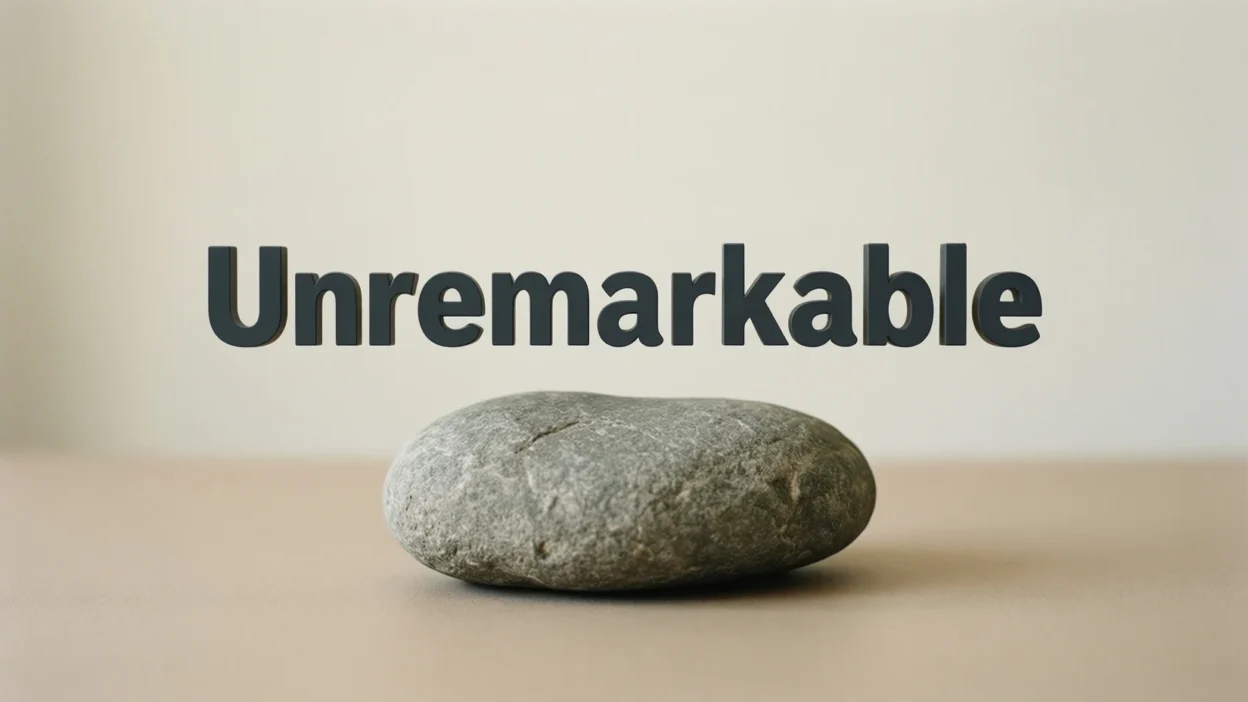
The word unremarkable is used in English to describe something that is ordinary, plain, or not special.
It is a simple word, but knowing it can make your writing and speaking more precise. You can use it to describe people, objects, events, or experiences that do not stand out.
In this article, we will explore the meaning of unremarkable, its synonyms, antonyms, and examples of how to use it in daily life.
Definition of Unremarkable
The word unremarkable is an adjective. It describes something that is normal, average, or not interesting. When something is unremarkable, it does not attract attention and does not have special qualities.
Literal Meaning:
- “Not remarkable” or “not worth noticing.”
Simple Meaning for Beginners:
- Something plain or ordinary.
- Something that does not stand out.
Part of Speech:
- Adjective
Example Sentences:
- The building on our street is unremarkable. It looks like all the others.
- Her handwriting is neat but unremarkable. It does not attract attention.
- The movie was unremarkable, but it was okay to watch.
Synonyms of Unremarkable
Here are some words with similar meanings:
- Ordinary – Something common or normal.
- Average – Not very good or very bad.
- Common – Happening a lot or usual.
- Typical – Shows what is usual or expected.
- Mediocre – Not very good, not very bad.
- Forgettable – Easy to forget, not memorable.
- Unexceptional – Not special or rare.
Example Sentences:
- The restaurant was ordinary, but the food was fine.
- His performance was average, nothing amazing.
- That song is forgettable, I already forgot the lyrics.
Antonyms of Unremarkable
Words that mean the opposite of unremarkable include:
- Remarkable – Very special or unusual.
- Extraordinary – Much better than normal.
- Exceptional – Rare or very good.
- Notable – Worth noticing or paying attention to.
- Outstanding – Very good, excellent.
- Unique – One of a kind.
- Memorable – Easy to remember.
Example Sentences:
- The view from the mountain was remarkable.
- She gave an extraordinary performance on stage.
- His painting is unique, unlike anything I have seen.
Usage of Unremarkable in Sentences
You can use unremarkable in many situations. Here are some examples:
Daily Conversation Examples:
- “The hotel was unremarkable, but it was cheap.”
- “His story was unremarkable, nothing new.”
Written English Examples:
- “The author describes the town as unremarkable, with ordinary streets and houses.”
- “Her essay was clear but unremarkable, lacking creativity.”
Classroom Examples for Students:
- “The student gave an unremarkable answer. It was correct but not detailed.”
- “The painting was unremarkable, but the colors were nice.”
Contexts Where You Might Use Unremarkable
Everyday Situations:
- Talking about buildings, clothes, food, or movies.
Academic or Formal Writing:
- To describe data, observations, or events that are average.
Neutral Opinions:
- Use unremarkable when you want to be polite but honest.
Describing Objects, Events, or Experiences:
- “The park was unremarkable, but it was quiet and clean.”
- “The lecture was unremarkable, but I learned some facts.”
Difference Between Unremarkable and Similar Words
Sometimes words like ordinary, average, or mediocre can be confused with unremarkable.
- Ordinary vs Unremarkable: Ordinary means normal; unremarkable also means normal but with a focus on not attracting attention.
- Average vs Unremarkable: Average is a measure of quality; unremarkable is a description of impression.
- Mediocre vs Unremarkable: Mediocre is slightly negative; unremarkable is neutral.
Example:
- The movie was ordinary. The movie was unremarkable.
Both sentences are correct, but “unremarkable” sounds more neutral.
Tips to Remember the Word Unremarkable
Memory Aids:
- Think “not remarkable.”
- Imagine something plain, like a grey rock.
Visual Cues for Vocabulary Learning:
- Draw a simple, plain object.
- Label it unremarkable.
Related Words and Phrases:
- Commonplace, nothing special, run-of-the-mill.
Importance of Learning Words Like Unremarkable
Expanding Descriptive Vocabulary:
- Using unremarkable helps you describe things clearly.
Writing More Precise Sentences:
- Instead of saying “It was okay,” you can say “It was unremarkable.”
Improving English Fluency for Students and ESL Learners:
- Knowing adjectives like unremarkable makes your English sound more natural.
Common Mistakes When Using Unremarkable
Confusing it With Negative Words:
- Unremarkable is neutral, not bad.
Overusing in Writing:
- Avoid using it too much; mix with synonyms like ordinary or average.
Mispronunciation and Spelling Errors:
- Correct pronunciation: /ˌʌn.rɪˈmɑːr.kə.bəl/
- Spelling tip: “un-remark-able”
Fun Facts About the Word Unremarkable
- Origin: From English, combining “un-” (not) + “remarkable” (worthy of attention).
- First Recorded Use: 1600s
- Usage in Literature: Often used to describe ordinary towns, objects, or people.
- Interesting Fact: Using “unremarkable” can make writing polite and professional.
FAQs
Q1: What does unremarkable mean in simple terms?
- Something ordinary or plain, not special or exciting.
Q2: Is unremarkable positive or negative?
- Neutral. It is not bad, but it is not special.
Q3: How do you use unremarkable in a sentence?
- “The painting was unremarkable, but the colors were pretty.”
Q4: What is the opposite of unremarkable?
- Remarkable, extraordinary, exceptional, or unique.
Conclusion
The word unremarkable is a useful adjective in English. It helps you describe ordinary things without sounding rude. You can use it in conversations, writing, and academic contexts. Knowing its synonyms, antonyms, and proper usage will make your English stronger.
Remember, something unremarkable is plain but fine, neutral, and easy to describe. Using this word correctly shows you have a rich vocabulary and can communicate clearly. Add “unremarkable” to your daily English, and practice it in sentences.

Jack London is a versatile writer with a strong ability to explain ideas in a clear and engaging way.
He focuses on creating informative, easy-to-understand content for a wide range of readers.
Jack London currently writes helpful articles for repliesnest.com, delivering trustworthy and reader-friendly information.