If you’ve ever scrolled through a math worksheet, a finance app, or even a sorting option on your phone and suddenly saw “arrange in ascending order,” you probably paused for a second — wait, what does that mean again? I’ve been there!
Whether it’s numbers, words, or lists, the phrase “ascending order” pops up everywhere, and if you’re not used to it, it can look confusing or overly technical.
But here’s the good news — it’s actually super simple. And once you understand it, the term makes perfect sense in everyday texting, studying, or data sorting.
Quick Answer:
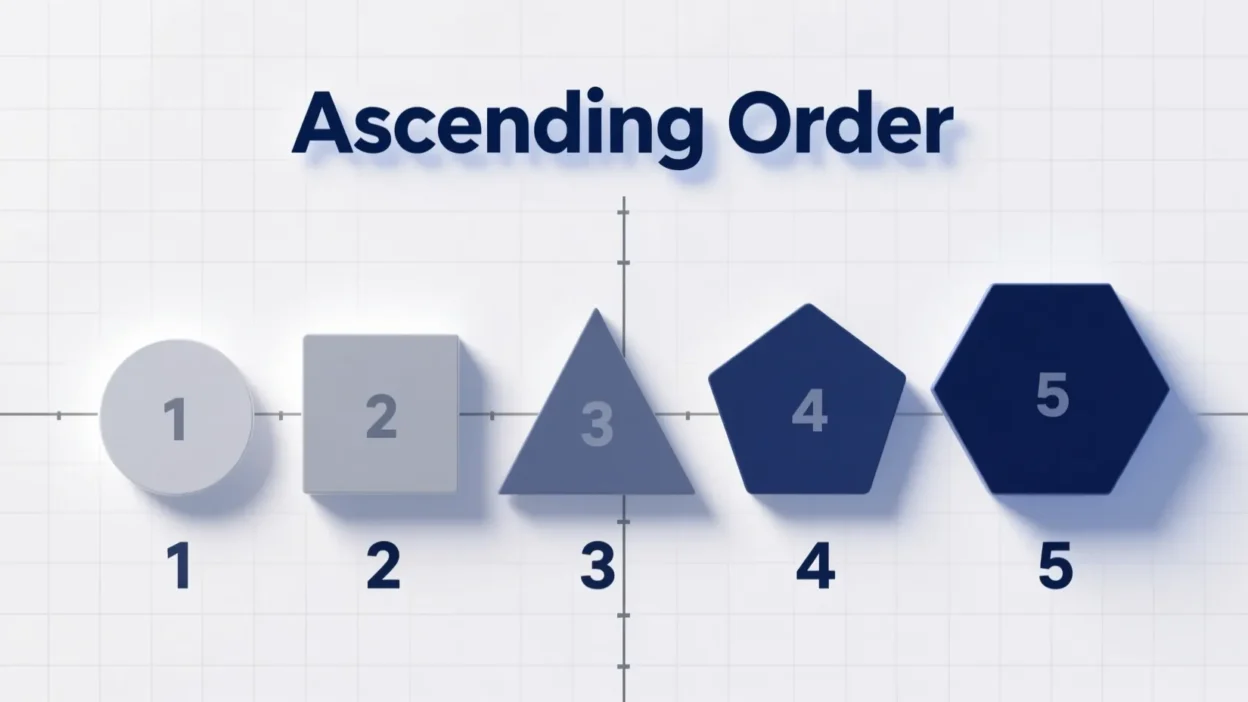
Ascending order means “arranged from smallest to largest.” It’s a simple, direct, and neutral way of saying “start from the lowest and move upward.”
What Does Ascending Order Mean in Text? 🧠
In texting, schoolwork, math problems, and even casual chats, ascending order refers to arranging things from the lowest value to the highest value.
It can apply to:
- Numbers (1, 2, 3, 4…)
- Letters (A–Z)
- Dates (oldest → newest)
- Sizes (small → big)
Example:
“Sort these scores in ascending order: 15, 3, 8, 20.”
→ Result: 3, 8, 15, 20
In short: Ascending order = smallest → biggest = lower → higher.
Where Is Ascending Order Commonly Used? 📱
You’ll see “ascending order” in many places, especially those involving organizing, listing, or sorting. Common platforms include:
- 📊 Math homework and tests
- 📱 Google Sheets / Excel (sorting data)
- 🛒 E-commerce filters (low-to-high prices)
- 📚 School assignments
- 💬 Texting when talking about order, ranking, or arranging things
- 🔢 Coding and programming
- 📆 Scheduling apps
Tone:
Ascending order is neutral and formal-friendly, meaning you can use it in:
- School work 👩🏫
- Office tasks 💼
- Social chats 📱
- Study groups 👥
It is not slang, but it fits perfectly in logical or instructional messages.
Examples of Ascending Order in Conversation 💬
Here are some short, realistic chat examples:
A: can you arrange these numbers?
B: yeah sure, i’ll put them in ascending order 👍
A: what’s the ascending order for these prices?
B: lowest to highest → 200, 350, 900
A: i’m sorting my files
B: do ascending order so the oldest shows first
A: is this list correct?
B: almost! put them in ascending order 🙂
A: which way is ascending again?
B: small → big 📈
A: should we organize the names alphabetically?
B: yeah ascending order A to Z
A: what’s the ascending order of dates?
B: oldest to newest!
When to Use and When Not to Use Ascending Order 🕓
✅ When to Use
Use “ascending order” when you want to be clear, organized, and logical:
- When sending school or math instructions
- When sorting data or lists
- When clarifying order in group chats
- When arranging things from simple → complex
- When giving neutral, step-by-step guidance
❌ When Not to Use
Avoid using it when:
- Chatting casually with friends about unrelated topics
- Talking quickly and casually — it can sound too technical
- You want informal or simple language like “smallest to biggest”
- The situation requires descending order instead
- Giving emotional or personal messages
Comparison Table
| Context | Example Phrase | Why It Works |
|---|---|---|
| Friend Chat | “sort the scores in ascending order 😄” | Casual but clear |
| Work Chat | “Please arrange the data in ascending order.” | Professional & precise |
| “Kindly sort the records in ascending order.” | Formal, respectful | |
| Study Group | “Let’s list the steps in ascending order.” | Logical & easy to follow |
| Social Media | “Prices listed from low to high (ascending).” | Informative |
Similar Words or Alternatives 🔄
Here are similar terms you can use depending on the situation:
| Term | Meaning | When to Use |
|---|---|---|
| Small to Big | Simplified version of ascending | Casual chats |
| Low to High | Prices, ranks, scores | Shopping, data sorting |
| A–Z | Alphabetical ascending | Names, lists |
| Oldest to Newest | Time/date ascending | Logs, files, timelines |
| Bottom to Top | Physical or metaphorical order | Steps, levels |
| Rising Order | Another way to say ascending | Academic or formal use |
FAQs
1. Is ascending order the same as A–Z?
Yes! Alphabetical order A → Z is a type of ascending order.
2. What is the difference between ascending and descending order?
- Ascending: small → big
- Descending: big → small
3. Is ascending order only for numbers?
No. It works for letters, prices, dates, rankings, file names, and more.
4. Is “ascending order” formal?
It’s neutral, so it works in school, offices, and even casual chats.
5. Which symbol shows ascending order?
An arrow pointing upward or rightward, like: 📈 ↑ →
Conclusion 🎯
Ascending order is one of those simple terms that shows up everywhere — from school assignments to sorting apps to everyday texting. It basically means arranging things from the smallest to the largest.
Once you understand it, organizing lists, prices, numbers, or data becomes quick and easy. Whether you’re chatting with friends, sending instructions, or working on something formal, knowing when (and how) to use ascending order helps you communicate clearly and confidently.