Have you ever been scrolling through job postings and saw the term “competitive pay” and thought, “Wait… does that mean good pay? Or just average?” 🤔 It’s a phrase that pops up all the time, especially when companies want to attract applicants without putting a fixed number in the job description. At first glance, it can feel a little vague or even mysterious. But don’t worry — by the end of this article, you’ll fully understand what competitive pay means, how to use it, and when it’s appropriate to bring it up.
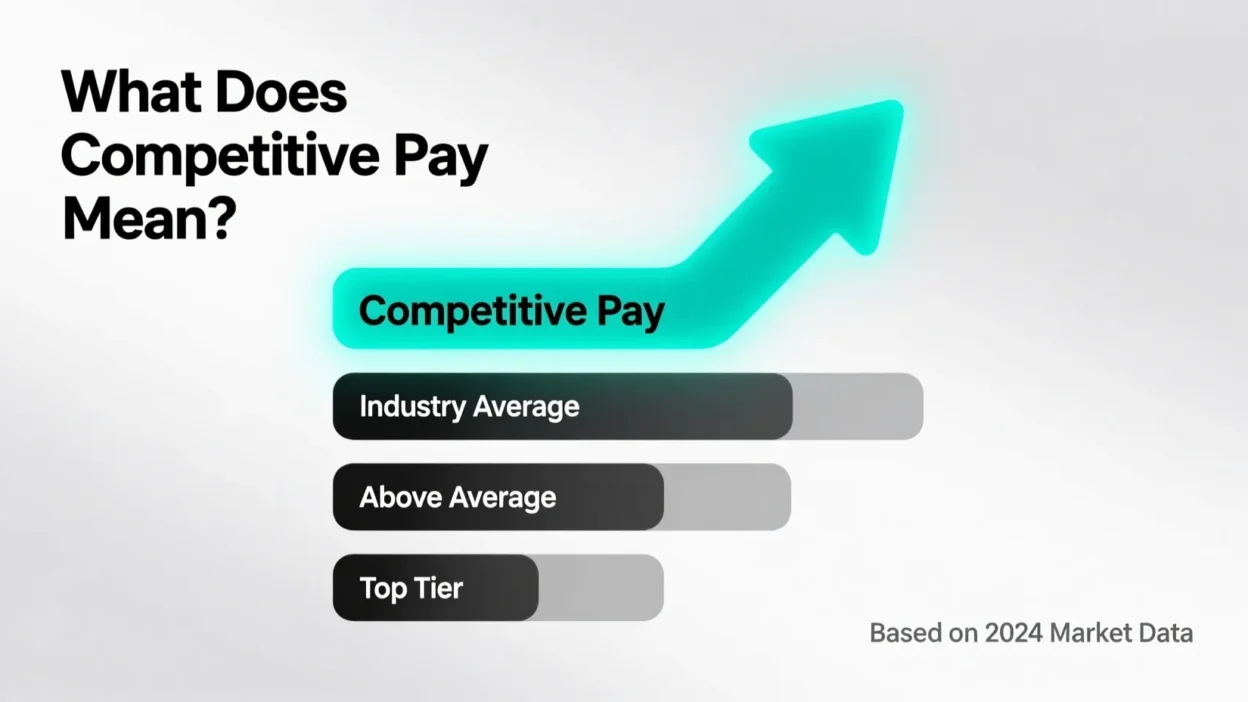
Quick Answer: Competitive pay means a salary or wage that is on par with, or slightly better than, what other employers in the same industry or region are offering. It’s a professional and formal way of saying, “We pay fairly compared to the market.”
What Does Competitive Pay Mean in Text? 🧠
The term competitive pay isn’t really slang in casual texting, but it can show up in professional messages or job discussions online. In simple words, it means a company offers salaries or wages that are comparable to, or slightly better than, what others in the same field pay.
Example sentence:
“This company offers competitive pay, so you won’t have to worry about being underpaid compared to other firms.”
In short:
Competitive pay = fair/market-level salary = pay that keeps up with industry standards.
Where Is Competitive Pay Commonly Used? 📱
Competitive pay is primarily used in professional and career-related contexts rather than casual texting. Here’s where you’ll encounter it most:
- 💼 Job postings & recruitment ads – Companies use it to attract talent without listing exact numbers.
- 🖥️ LinkedIn messages – Recruiters mention it when contacting potential candidates.
- 📧 Professional emails – HR or managers might describe a salary package as competitive.
- 🌐 Career blogs and websites – Articles often compare companies’ competitive pay.
Tone: Formal, professional, career-oriented. Not typically used in casual or social chats.
Examples of Competitive Pay in Conversation 💬
Here are some realistic examples of how “competitive pay” might appear in professional chats:
A: “Hey, did you check out that new job posting?”
B: “Yes! It says they offer competitive pay 😎”
A: “I’m worried this role might underpay.”
B: “Don’t worry, the posting mentioned competitive pay 👍”
A: “Is the salary negotiable?”
B: “It’s competitive pay, so there’s some flexibility 💰”
A: “I’m looking for something that pays well.”
B: “Try that company — they advertise competitive pay 😄”
A: “Why didn’t they list the exact salary?”
B: “They just say competitive pay — standard for many listings ✨”
When to Use and When Not to Use Competitive Pay 🕓
✅ When to Use:
- Discussing job offers with peers or mentors
- Responding to HR inquiries professionally
- Mentioning pay in professional emails or LinkedIn messages
❌ When Not to Use:
- Casual social media posts or texts with friends
- Urgent financial questions (e.g., “I need $ now!”)
- Informal chats unrelated to careers
Comparison Table:
| Context | Example Phrase | Why It Works |
|---|---|---|
| Friend Chat | “No rush, competitive pay is fine 😄” | Casual & friendly |
| Work Chat | “The role offers competitive pay.” | Professional & clear |
| “Our company provides competitive pay aligned with industry standards.” | Formal & precise |
Similar Slang Words or Alternatives 🔄
While “competitive pay” isn’t slang, there are other professional phrases that mean similar things:
| Phrase | Meaning | When to Use |
|---|---|---|
| Market-rate salary | Pay that matches industry standards | Job postings, career discussions |
| Attractive compensation | Salary + benefits that appeal to candidates | Recruitment ads, HR messages |
| Fair pay | Reasonable salary for the role | Employee meetings, professional chats |
| Industry-standard pay | Typical pay in a specific field | Job descriptions, formal documents |
| Salary aligned with market | Salary comparable to peers in same industry | Professional emails, LinkedIn |
FAQs
Q1: Does competitive pay mean a high salary?
Not necessarily. It means the pay is on par with the industry average, though sometimes slightly above to attract talent.
Q2: Is it only about salary?
No, sometimes “competitive pay” includes benefits, bonuses, and perks, not just base salary.
Q3: Can you negotiate competitive pay?
Yes! Even if a job posting says “competitive pay,” you can often negotiate based on experience, skills, or additional qualifications.
Q4: Is competitive pay the same worldwide?
No, it varies by region, industry, and job level. What’s competitive in one city or country might be low in another.
Q5: Is it formal or casual language?
It’s formal/professional, mainly used in career-related contexts, not casual texting.
Conclusion
Understanding competitive pay is key when navigating job offers or professional conversations.
Essentially, it assures you that the salary and benefits are fair compared to the market. While it may feel vague at first, knowing its meaning helps you communicate confidently during interviews, career chats, and professional emails.
Next time you see competitive pay in a job posting, you’ll know exactly what it implies — fair, market-aligned, and sometimes even negotiable.

Sophia Mitchell is a passionate content writer known for creating clear, engaging, and informative articles.
She focuses on delivering well-structured content that is easy for readers to understand and trust.
Sophia Mitchell currently contributes quality writing to repliesnest.com, helping readers find accurate answers quickly.