Hey, I recently ran into a situation where I didn’t quite understand the term “per se.” I was honestly a bit confused at first about what it really means and how to use it correctly.
I wanted to make sure I said it right in a conversation, but I ended up making a small mistake.
Then I did some research and looked at examples, and finally, I realized that “per se” is usually used to refer to something in itself or in its actual sense.
I want to share this with you so you can easily understand it too.
🧠 What Does Per Se Mean in Text?
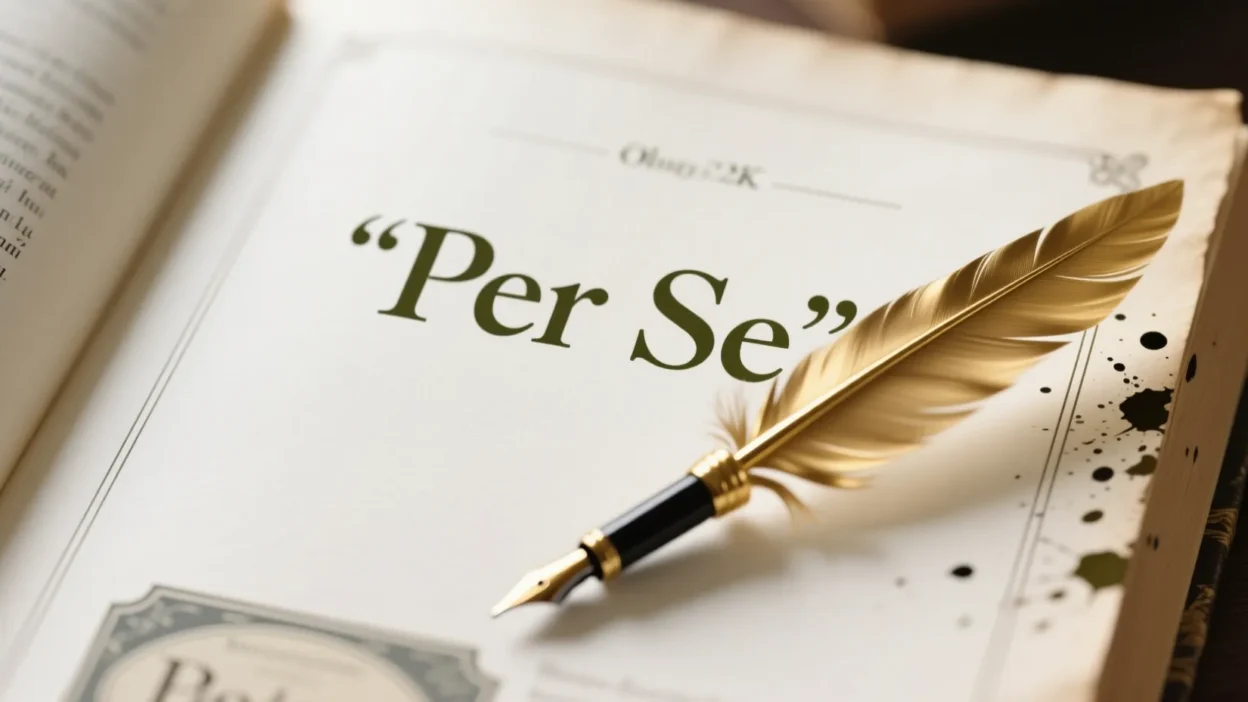
The phrase per se comes from Latin and literally translates to “by itself”. In everyday English, it’s used to clarify that you’re talking about something in isolation, without other factors affecting it.
For example:
“I don’t hate pizza per se, but I just don’t like it with pineapple.”
Here, the person isn’t saying they dislike pizza entirely. They’re just pointing out a specific aspect they don’t enjoy.
In short:
Per se = by itself = inherently, in isolation.
This makes it a handy phrase when you want to be precise, whether in writing, texting, or casual online discussions.
📱 Where Is Per Se Commonly Used?
Although per se originated in formal or academic contexts, it’s increasingly popping up in casual conversations, social media, and texting. Here’s where you might see it:
- Texting & Group Chats 💬 – when clarifying opinions or thoughts.
- Social Media (Twitter, Instagram, TikTok) 📱 – to make a point clear or sound precise.
- Emails ✉️ – occasionally in professional contexts, though less casual.
- Blog Posts & Articles 📝 – to highlight a specific point.
Tone Tip:
- Formal: ✅ Possible but rare
- Casual: ✅ Works well if used sparingly
- Social media: ✅ Totally fine, adds clarity and a touch of sophistication
💬 Examples of Per Se in Conversation
Here are some realistic ways per se might show up in texting:
Example 1:
A: “Do you like horror movies?”
B: “Not horror movies per se, just the really scary ones 😅”
Example 2:
A: “Is this app bad?”
B: “It’s not bad per se, just a bit buggy sometimes 🤷♀️”
Example 3:
A: “Do you dislike him?”
B: “No per se, just don’t vibe with his humor 😬”
Example 4:
A: “Is that dress ugly?”
B: “Not ugly per se, just not my style 👗”
Example 5:
A: “Are online classes boring?”
B: “Not boring per se, just not as engaging as in-person 😐”
Example 6:
A: “Do you mind spicy food?”
B: “Not per se 🌶️, but I can’t handle too much heat 😅”
🕓 When to Use and When Not to Use Per Se
✅ When to Use:
- When clarifying your opinion
- To highlight specifics or exceptions
- Friendly or casual discussions with a thoughtful tone
- On social media posts where precision is needed
❌ When Not to Use:
- In urgent or emergency situations
- In extremely casual “fast” texting where brevity matters
- With people unfamiliar with the term (may cause confusion)
- In very informal jokes that don’t require clarification
Comparison Table:
| Context | Example Phrase | Why It Works |
|---|---|---|
| Friend Chat | “Not bad per se, just a little slow 😄” | Casual & friendly |
| Work Chat | “The proposal isn’t incorrect per se, but it could use refinement.” | Polite & professional |
| “The results are not flawed per se, however further analysis is recommended.” | Formal & clear |
🔄 Similar Slang Words or Alternatives
If you like per se, here are some similar words and phrases you can use:
| Slang/Word | Meaning | When to Use |
|---|---|---|
| In itself | By its own nature | Formal or casual text |
| Intrinsically | Naturally or inherently | Academic, professional, casual |
| Essentially | Basically, fundamentally | Casual chats or social media |
| Strictly speaking | Precisely, technically | When correcting or clarifying |
| As such | Therefore, by that fact | Writing, professional emails |
❓ FAQs
Q1: Is per se formal or casual?
A: It’s originally formal, but it works casually in texts or social media if used sparingly.
Q2: Can I use per se in a text with friends?
A: Yes! Just make sure it fits naturally. For example: “Not annoying per se, just a bit loud 😂.”
Q3: What’s the difference between per se and basically?
A: Per se emphasizes something on its own, while basically summarizes or simplifies a point.
Q4: Can per se be used negatively?
A: Definitely. It can be used to soften criticism, e.g., “Not bad per se, just not great.”
Q5: Is it a flirty phrase?
A: Not really — it’s neutral. Using it in flirty messages can sound witty or sophisticated, but it’s not inherently flirty.
✅ Conclusion
So next time you see per se in a chat, post, or article, don’t panic. It simply means “by itself” or “inherently”.
It’s a handy phrase to clarify your thoughts or opinions, whether in a casual text with friends or a more formal email.
By understanding the context and tone, you can confidently sprinkle per se into your writing and conversation — adding a touch of clarity and sophistication every time.
Using it smartly makes your language more precise without sounding over the top. So go ahead, try it in your next text or post, and see how smoothly it fits!

Liam Bennett is a dedicated content writer who creates clear, engaging, and well-structured articles.
He focuses on delivering practical information that is easy for readers to understand and apply.
Liam Bennett currently writes high-quality content for repliesnest.com, ensuring clarity and reliability.